Why do we wait 6 hours between milk and meat
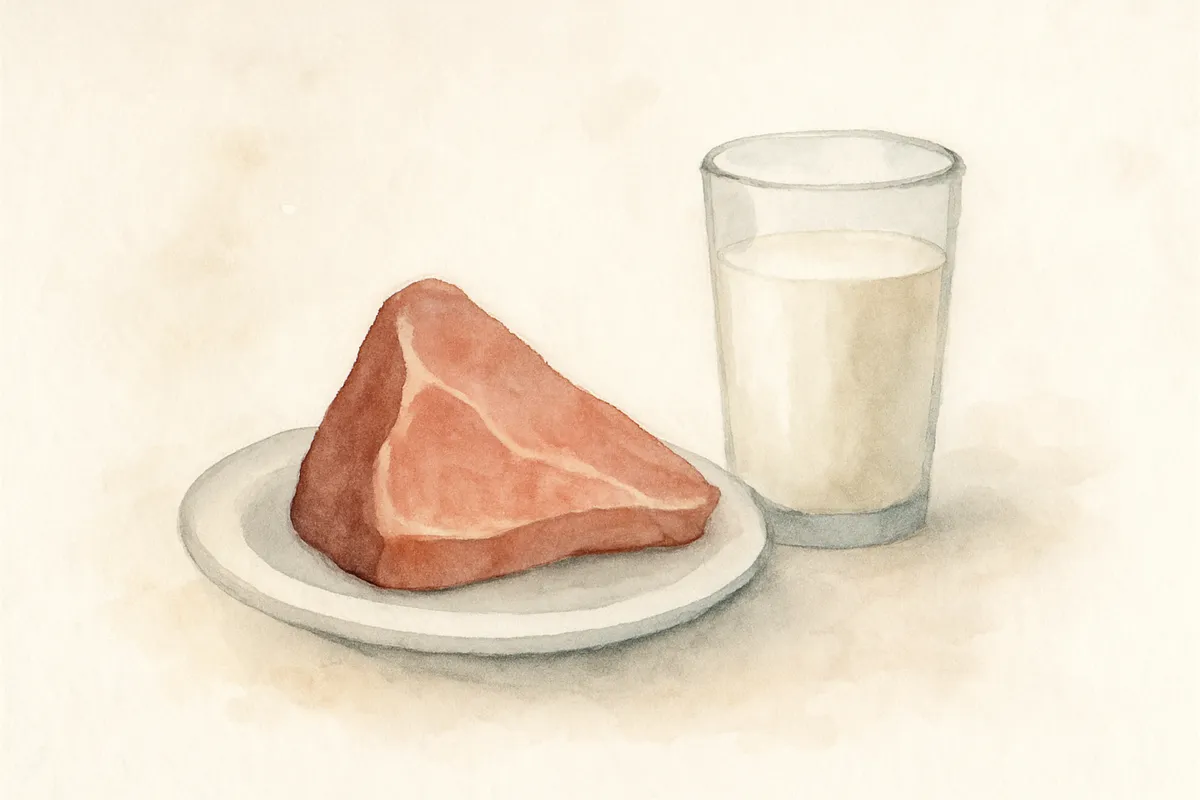
The custom of waiting 6 hours between eating meat and then dairy is rooted in a Talmudic ruling later codified in Jewish law, based on the Torah's prohibition of mixing meat and milk. The 6-hour wait is the most widely accepted practice, though significant authorities permit shorter waiting periods, and the exact duration depends on one's community tradition.
Key Takeaways
- The Torah prohibits cooking meat and milk together (Exodus 23:19), which the Rabbis extended to eating them together.
- The Talmud requires a waiting period after meat before eating dairy, based on the concern that meat leaves a lasting presence in the mouth and body.
- Six hours is the dominant Ashkenazic and Sephardic practice, derived from interpreting "a meal's time" as six hours.
- Some authorities (notably Mar Ukvah and Dutch/German communities) permit waiting only one hour or after a single meal, though this is a minority position.
- The wait goes meat → dairy, not the reverse; after dairy one need only rinse and wait a short time before eating meat (with some exceptions).
The Torah Source
The foundation is the verse repeated three times in the Torah:
לֹא תְבַשֵּׁל גְּדִי בַּחֲלֵב אִמּוֹ — "You shall not boil a kid in its mother's milk" [Exodus 23:19, 34:26; Deuteronomy 14:21]
The Talmud derives from the triple repetition three separate prohibitions: (1) cooking, (2) eating, and (3) deriving benefit from meat and milk together [Chullin 115b].
The Talmudic Basis for Waiting
The core source for the waiting period is found in the Talmud:
"Mar Ukvah said: In this matter I am like vinegar compared to wine relative to my father — for my father, having eaten meat, would not eat cheese for that entire day and the following night. As for me, I do not eat cheese in the same meal, but I do so in the next meal." [Chullin 105a]
This passage establishes two key points:
- There is a required waiting period after meat.
- There is a debate about how long — from "the next meal" to a full day.
Why Six Hours Specifically?
The Talmud itself does not specify "six hours." The Rishonim derived this number through reasoning:
- Rashi [Chullin 105a] explains that "from meal to meal" means approximately six hours, since in those times people ate two meals a day roughly six hours apart.
- The Rambam (Maimonides) [Mishneh Torah, Hilchot Ma'achalot Asurot 9:28] rules explicitly: "One who eats meat first... must wait six hours before eating dairy, because meat gets stuck between the teeth and because of the fat of the meat which rests in the mouth for a long time."
The Shulchan Aruch (the authoritative code of Jewish law) codifies the six-hour wait [Yoreh De'ah 89:1], which became the accepted practice for Sephardim and most Ashkenazim.
The Reasons Given for Waiting
Later authorities offer two main physiological/halachic rationales:
1. Meat Between the Teeth
Meat gets lodged between the teeth and remains there, effectively making the mouth "meaty" even after swallowing. This is why rinsing and checking one's mouth matters, but is insufficient to eliminate the wait.
2. The "Heaviness" of Meat (Shuman — Fat)
The Rambam emphasizes that the fatty residue of meat lingers in the throat and mouth for an extended time. Six hours was considered the duration for this sensation to fully dissipate.
The Taz (Rabbi David HaLevi Segal) [Yoreh De'ah 89:2] adds that the six-hour period applies even if one no longer tastes the meat, because the digestion process itself takes that long.
Different Community Customs
| Community | Wait Time | Primary Authority | |---|---|---| | Sephardim & most Ashkenazim | 6 hours | Rambam, Shulchan Aruch | | Some German/Dutch Jews (Yekkes) | 3 hours | Minhag based on a "shorter meal period" | | Some early Ashkenazic custom | 1 hour | Based on Mar Ukvah literally ("next meal") | | Certain Chassidic communities | 6 hours | Following Shulchan Aruch strictly |
The Rema (Rabbi Moshe Isserles), the great Ashkenazic authority, notes that some have the custom of waiting only one hour or after washing and checking their mouth and teeth, but he himself recommends six hours as the proper practice [Rema on Yoreh De'ah 89:1].
After Dairy → Meat: Much Shorter Wait
Importantly, the reverse — eating dairy before meat — requires a much shorter wait:
- One must rinse the mouth, check the teeth, and eat a palate-cleansing food (like bread).
- No fixed time wait is required in most opinions.
- Exception: Hard cheeses aged 6+ months require a full wait just like meat, because they are considered as "substantial" and leave a fatty residue similar to meat [Rema, Yoreh De'ah 89:2].
The Deeper Spiritual Dimension
The laws of kashrut (including this waiting period) are connected to the Torah's call to holiness. As the Torah states:
וִהְיִיתֶם קְדֹשִׁים כִּי קָדוֹשׁ אָנִי — "You shall be holy, for I am holy" [Leviticus 11:44, as cited in Source 2 above]
The Sefer HaChinuch (Mitzvah 92) explains that the meat-milk prohibition creates a spiritual discipline of self-restraint, training us to recognize boundaries in physical pleasure — a central theme of Jewish spiritual life.
For personal guidance on your specific community custom or practical halachic questions, consult your local rabbi or posek.
Sources
People Also Asked
Want to dig deeper?