Why do we need to open a new bottle of wine for kiddush on Friday night. Why can't we use a bottle was opened last week
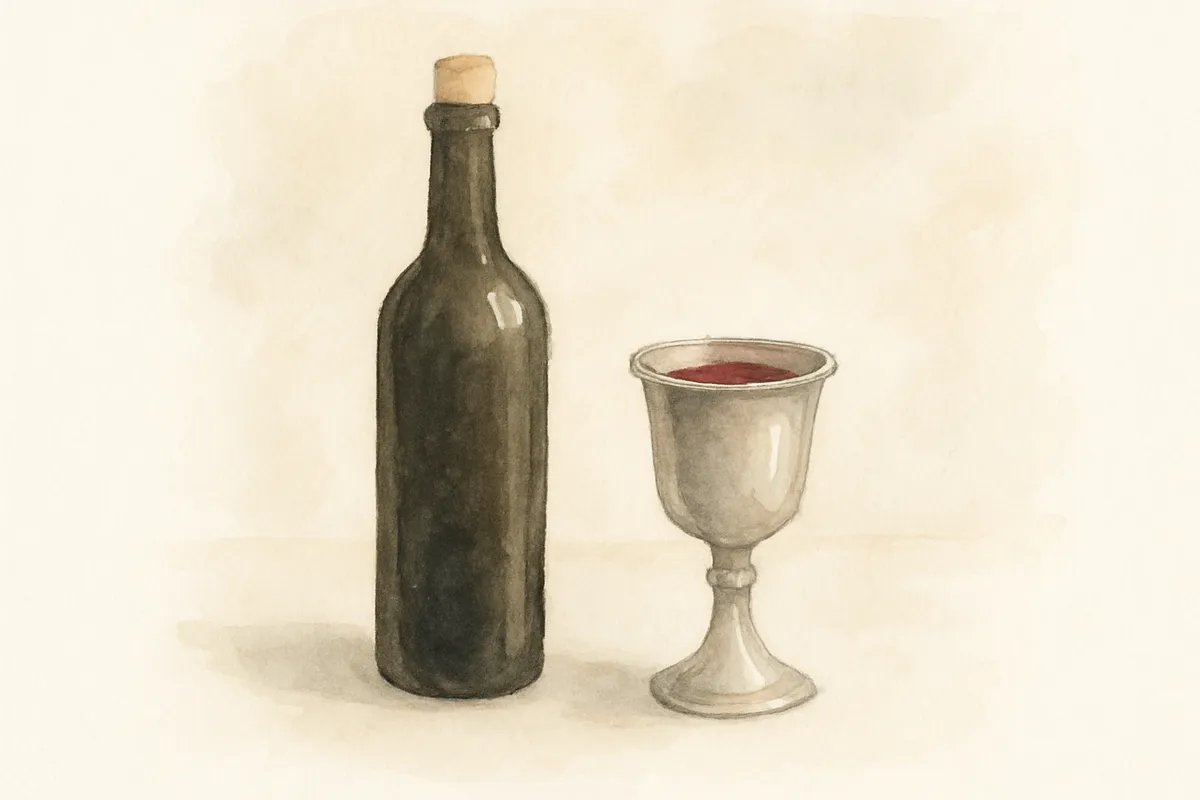
Using a Previously Opened Bottle of Wine for Friday Night Kiddush
Using a previously opened bottle of wine for Kiddush (the sanctification recited over wine on Shabbat) is generally permitted as long as the wine has not deteriorated in quality, smell, or taste. There is no requirement to open a new bottle each week. The key halachic concern is not whether the bottle is "new," but whether the wine itself remains of suitable quality and honor for use in a mitzvah.
Key Takeaways
- There is no halachic requirement to open a new bottle of wine for Kiddush — previously opened wine is permitted if still of good quality.
- The Torah's command is "zachor et yom haShabbat lekadsho" — "remember the Sabbath day to sanctify it" — which the Sages derive requires recitation over wine [Exodus 20:8].
- Wine with a bad smell (reicho ra) is disqualified for Kiddush, even if it still tastes like wine [Shulchan Aruch, OC 272:1].
- The underlying principle disqualifying inferior wine is "hakriveihu na l'fechatecha" — "present it to your governor" — would you offer this to a dignitary? [Mishnah Berurah 272:2].
- Leftover wine from previous weeks is perfectly acceptable, provided it has not spoiled or become vinegar.
The Biblical Foundation for Kiddush
The obligation of Kiddush is rooted in the verse:
"זָכוֹר אֶת־יוֹם הַשַּׁבָּת לְקַדְּשׁוֹ" "Remember the Sabbath day to sanctify it." [Exodus 20:8]
The Sages derived from the word zachor (remember) that this sanctification must be performed verbally, and specifically over wine — as stated in the Tur: "זכרהו על היין בכניסתו" — "Remember it over wine upon its entry [i.e., the onset of Shabbat]" [Tur, Orach Chayim 271:1].
The sanctity of Shabbat itself goes back to Creation:
"וַיְבָרֶךְ אֱלֹהִים אֶת־יוֹם הַשְּׁבִיעִי וַיְקַדֵּשׁ אֹתוֹ" "God blessed the seventh day and sanctified it." [Genesis 2:3]
What Actually Disqualifies Wine for Kiddush?
The Shulchan Aruch (OC 272:1) lists specific disqualifications — none of which are about whether the bottle is new or old:
- Bad smell (reicho ra): Wine that has an unpleasant odor is disqualified, even if it still tastes like wine.
- Uncovered wine (yayin megulle): Wine left uncovered is disqualified (though today, in places without venomous snakes, this is less practically relevant, it is still mentioned).
- Wine that smells like vinegar but tastes like wine: Disqualified.
- Wine that smells like wine but tastes like vinegar: This is simply vinegar — not wine at all, and clearly invalid.
The Mishnah Berurah (272:2) explains the underlying principle:
"משום הקריבהו נא לפחתך" — the verse from Malachi (1:8): "Present it now to your governor — would he be pleased with you?"
This means: wine fit for Kiddush must be wine you would be comfortable serving to an important dignitary. If it has gone off, become malodorous, or degraded in quality, it fails this standard — regardless of when the bottle was opened.
Opened Wine From a Previous Week: Is It Permitted?
Yes — the halacha does not require a freshly opened bottle. The Shulchan Aruch explicitly permits wine that has been sitting:
- Wine from the top of a barrel (yayin shebfi hachavit), even with sediment, is acceptable [Shulchan Aruch, OC 272:3].
- Wine from the bottom of a barrel, even with lees (shmarim), is permitted [ibid.].
These rulings indicate that the age or storage status of wine is not the determining factor — quality and fitness are what matter.
Practical Guidelines for Leftover Wine
Based on the sources, here are the practical considerations for using last week's wine:
- ✅ Still smells and tastes like good wine? → Perfectly acceptable for Kiddush.
- ✅ Has some sediment or was stored properly sealed? → Acceptable.
- ❌ Has turned or smells "off" (gone toward vinegar)? → Disqualified by the Shulchan Aruch and Mishnah Berurah.
- ❌ Has a foul or unpleasant odor? → Disqualified even if the taste is still wine-like.
A Note on Kavod Shabbat (Honoring Shabbat)
While not a strict halacha, there is a broader concept of kavod Shabbat — honoring the Shabbat appropriately. Some people customarily open a fresh bottle as an expression of honor for Shabbat, and this is a beautiful hiddur mitzvah (beautification of a commandment). But it is a custom of honor, not a legal requirement.
The Tur emphasizes that one should prioritize purchasing wine for Friday night Kiddush above other Shabbat expenses when resources are limited [Tur, OC 271:1; Shulchan Aruch, OC 271:3] — the focus is on having good wine, not on it being newly opened.
For personal guidance on specific situations, consult your local rabbi or posek.
Sources
People Also Asked
Want to dig deeper?