What is the summary of Parshat Chukat?
Parshat Chukat: Summary and Overview
Parshat Chukat (Numbers 19–21) is one of the most dramatic portions in the Torah, covering the enigmatic law of the Red Heifer (Parah Adumah), the deaths of Miriam and Aaron, Moses' fateful striking of the rock, and Israel's military victories on the way to Canaan. It is named for the word chukat (חֻקַּת), meaning "statute" or "decree" — highlighting that its opening law defies simple rational explanation.
Key Takeaways
- The Parah Adumah (Red Heifer) is the Torah's quintessential chok — a divine decree whose logic transcends human understanding.
- Miriam and Aaron both die in this parasha, marking the end of the Exodus generation's leadership.
- Moses strikes the rock instead of speaking to it, and is consequently barred from entering the Land of Israel.
- Israel defeats the Amorite kings Sichon and Og, beginning the conquest of Transjordan.
- The parasha raises profound questions about leadership, obedience, mortality, and divine mystery.
1. The Law of the Red Heifer (Numbers 19)
The parasha opens with God commanding Moses and Aaron concerning the Parah Adumah — a completely red, unblemished cow that had never been yoked. It was to be slaughtered outside the camp, burned entirely, and its ashes mixed with water to create a purification solution (mei niddah) for those who had become ritually impure through contact with a corpse (tum'at met).
The famous paradox: the ashes purify the impure person, yet defile those who prepare them. This apparent contradiction made it the classic example of a chok — a divine law beyond rational explanation.
[Rashi, Numbers 19:2], citing the Midrash, explains: "Since Satan and the nations of the world ridicule Israel, saying, 'What is the meaning of this commandment?' therefore the Torah uses the term chukah — it is a decree from before Me, and you have no permission to question it."
[Ramban, Numbers 19:2] engages with Rashi's view and goes further, suggesting that the commandment does have deeper mystical reasons, but they are not disclosed openly in the Torah text. [Source 7]
The Rambam (Maimonides) lists the laws of the Red Heifer among the key divisions of tahara (ritual purity) in his legal code. [Mishneh Torah, Overview 10:2]
2. The Death of Miriam and the Waters of Meribah (Numbers 20:1–13)
Immediately after the laws of purity, Miriam dies at Kadesh. The Torah records her death in a single verse, with no eulogy — a striking literary restraint.
Following her death, the people have no water and complain bitterly to Moses and Aaron. God commands Moses to speak to the rock to bring forth water. Instead, Moses strikes the rock twice, crying out: "Listen, you rebels — shall we bring water from this rock?!"
Water flows — but God declares that both Moses and Aaron will not lead the people into Canaan because they did not sanctify God (lo kidashtem oti) before the people.
This episode has generated enormous commentary debate:
- Rashi — Moses' sin was striking instead of speaking.
- Maimonides — Moses' sin was losing his temper and speaking harshly ("you rebels").
- Ramban — Moses implied it was he and Aaron, not God, bringing the water ("shall we bring...").
- Rabbenu Chananel — Moses lacked sufficient faith (emunah).
The Talmud in [Pesachim 66b] teaches that anger causes even the wisest person to lose their wisdom, citing Moses himself as the proof — when Moses grew angry at the officers of the army, he forgot certain laws, and Elazar had to teach them in his place. [Source 3] This principle is highly relevant to understanding Moses' failure at Meribah.
3. The Death of Aaron (Numbers 20:22–29)
God instructs Moses to bring Aaron and his son Elazar to Mount Hor. There, Moses transfers Aaron's priestly garments onto Elazar, and Aaron dies on the mountaintop. The entire nation mourns him for thirty days.
The Talmud and Midrash highlight that Aaron was mourned more openly than Moses because Aaron was a rodef shalom — a pursuer of peace — beloved by all the people.
4. The Bronze Serpent — Nachash Nechoshet (Numbers 21:4–9)
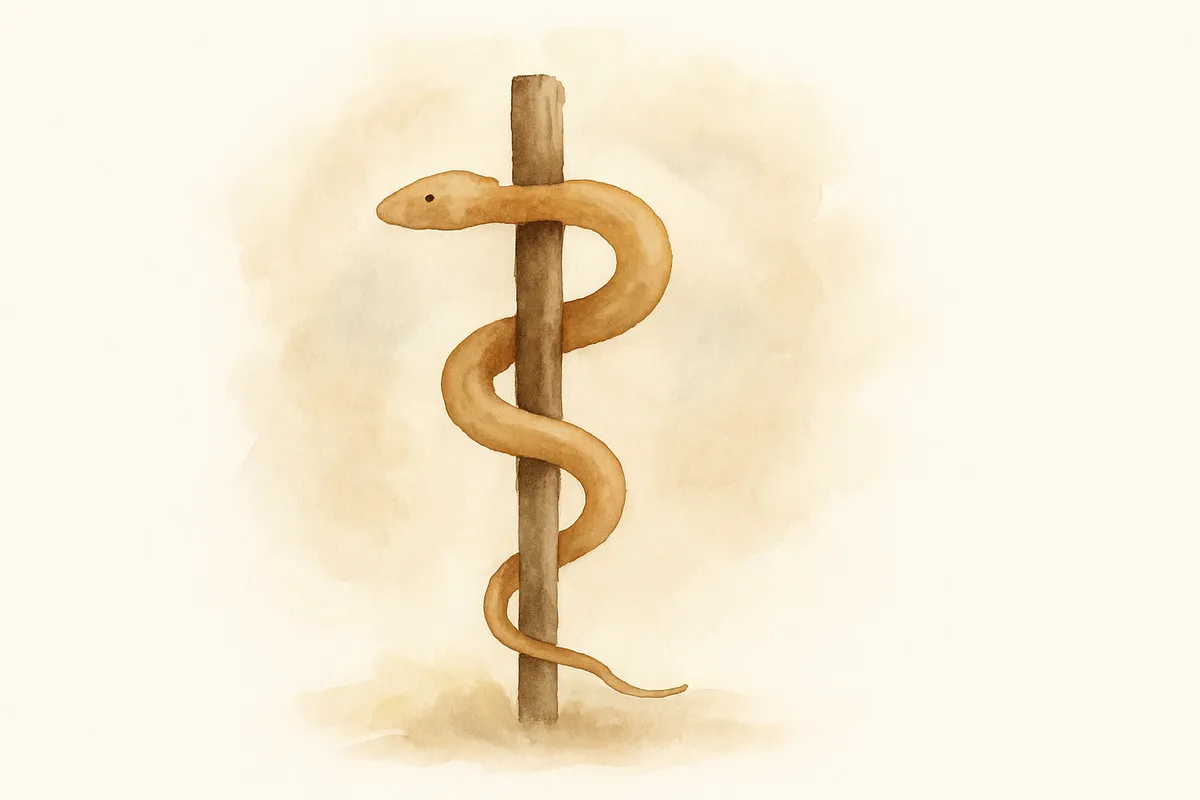
The people speak against God and Moses, complaining about the mann (manna). God sends venomous serpents that kill many Israelites. When the people repent, God instructs Moses to fashion a bronze serpent and mount it on a pole — anyone bitten who looked upon it would live.
The Mishnah (Rosh Hashanah 3:8) clarifies: it was not the serpent itself that healed, but rather that looking upward directed the people's hearts toward their Father in Heaven.
5. Military Victories: Sichon and Og (Numbers 21:10–35)
The parasha closes with Israel's victories over:
- The King of Arad (Canaanite)
- Sichon, King of the Amorites, who refused Israel passage
- Og, King of Bashan, a giant of legendary strength
These victories marked the beginning of Israel's territorial conquest east of the Jordan, setting the stage for the entry into Canaan.
Deeper Themes
The Chok and Human Understanding
The Red Heifer paradigm teaches that not all Divine commands need to be rationally justified. The Rambam in [Mishneh Torah, Foundations of the Torah 9:1] emphasizes that the Torah is eternal and unchanging — "חֻקַּת עוֹלָם לְדֹרֹתֵיכֶם" — "an eternal statute for your generations." [Source 4] Obedience itself is a form of emunah (faith).
Leadership and Mortality
The deaths of Miriam and Aaron, and the disqualification of Moses, signal a transition of generations. The parasha embodies the painful truth that even the greatest leaders are subject to Divine judgment — and that a new generation must carry the mission forward.
Purification and Impurity
The laws of the Red Heifer connect to the Torah's broader system of tahara v'tum'ah (purity and impurity). [Leviticus 16:29] similarly commands innui nefesh (self-affliction/fasting) on Yom Kippur as part of the national purification process — both rituals pointing to the Torah's deep concern with spiritual cleansing. [Source 1]
For personal halachic guidance regarding any laws discussed in this parasha, consult your local rabbi or posek.
Sources
People Also Asked
Want to dig deeper?