What is the summary of Parshat Behaalotecha?
Parshat Behaalotecha — Summary and Overview
Parshat Behaalotecha (Numbers 8–12) is one of the richest and most varied portions in the Torah, covering a wide range of topics as the Israelites prepare to leave Sinai and begin their journey toward the Promised Land.
Key Takeaways
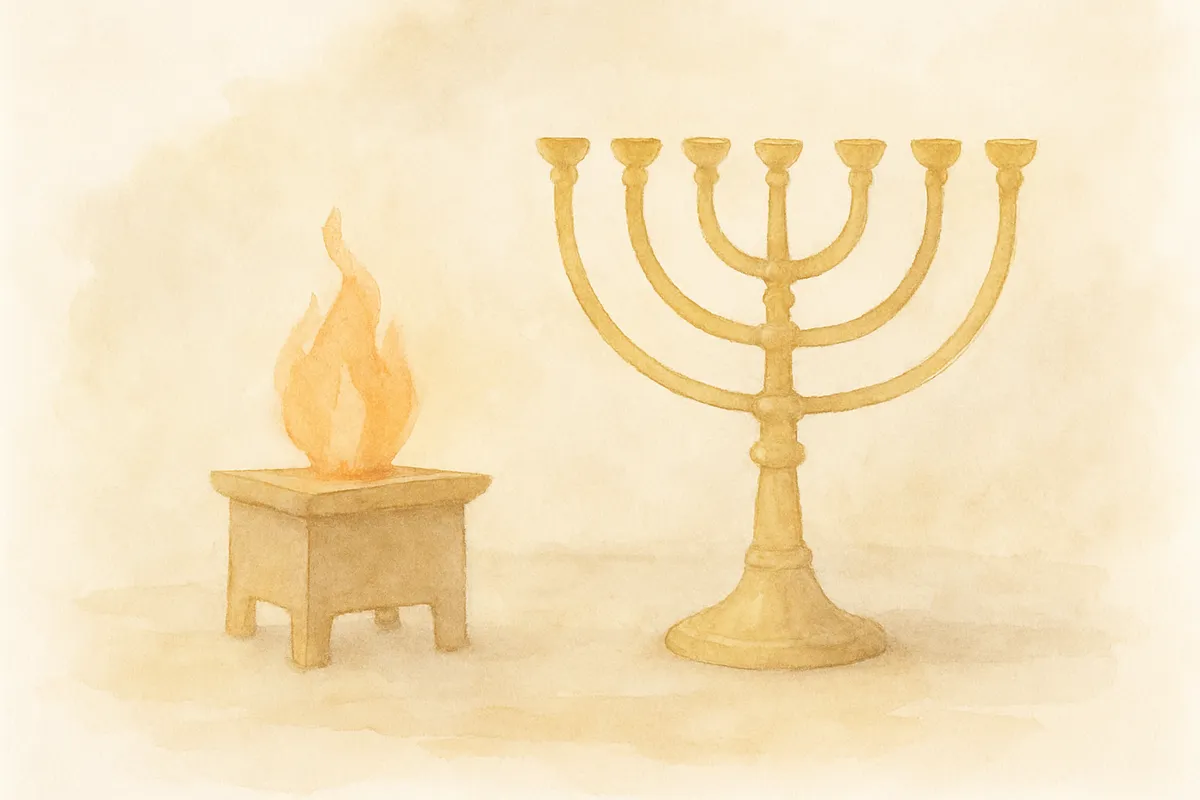
- The parasha opens with Aaron's lighting of the Menorah (candelabra) in the Tabernacle, symbolizing spiritual illumination.
- The Levites are formally consecrated for their special service, replacing the firstborn in their Temple role.
- Israel departs from Sinai after nearly a year, guided by the Cloud of Glory and the silver trumpets.
- The people repeatedly complain — about hardships, about the manna, and against Moses himself — leading to divine consequences.
- Moses's unique prophetic status is affirmed by God in response to the challenge of Miriam and Aaron.
Detailed Summary
1. The Menorah: Aaron's Lighting (Numbers 8:1–4)
The parasha begins with God commanding Moses to tell Aaron how to light the Menorah (the seven-branched candelabrum) in the Tabernacle: "בְּהַעֲלֹתְךָ אֶת הַנֵּרֹת" — "When you kindle the lamps" (Numbers 8:2).
The Sforno notes that Aaron is singled out for this role because the entire desert period carried a uniquely elevated, almost Yom Kippur-like sanctity [Sforno, Leviticus 24:3]. Rashi (from his training knowledge) famously explains that Aaron was initially distressed that the twelve tribal princes brought dedications for the Tabernacle but he had no role — God comforted him by saying the Menorah-lighting was his permanent, beloved task.
2. Consecration of the Levites (Numbers 8:5–26)
The Levites undergo a purification ceremony and are formally dedicated to God's service. They are presented as a "wave offering" before God. The Rashbam connects the census and preparation of fighting-age men to the imminent march toward Canaan [Rashbam, Numbers 1:2], providing context for why all the tribes were being organized during this period.
The Levites serve from ages 25 to 50, after which they retire from active service but may assist their colleagues.
3. Pesach Sheni — The Second Passover (Numbers 9:1–14)
Some men who were ritually impure could not bring the Passover offering. They came to Moses and asked: "Why should we be diminished?" — a remarkable moment of individuals seeking to take on more mitzvot. God responds by instituting Pesach Sheni (a "Second Passover") on the 14th of Iyar for those who were impure or far away.
This is one of the only commandments in the Torah that originated from the initiative of the people rather than from God directly.
4. The Cloud of Glory and the Trumpets (Numbers 9:15–10:36)
The Cloud of Glory (Anan HaKavod) rested on the Tabernacle and guided all of Israel's journeys — when it lifted, they traveled; when it rested, they camped.
Two silver chatzotzrot (trumpets) were crafted to signal different messages: assembly, travel, war, and festivals. This section represents the height of Israel's organization as a nation.
The parasha then records the departure from Sinai on the 20th of Iyar in the second year — after nearly a full year camped at Har Sinai. The Rashbam explicitly notes that this departure is why the census was taken at the beginning of the month: the men of twenty years and older needed to be counted as they were now fit for military service in the conquest of Canaan [Rashbam, Numbers 1:2].
Moses's famous words as the Ark traveled — "קוּמָה ה' וְיָפֻצוּ אֹיְבֶיךָ" / "Arise, O Lord, and let Your enemies be scattered!" (Numbers 10:35) — are recited to this day when the Torah is taken from the Ark in synagogue.
5. The Complaints Begin: Fire at Taveirah (Numbers 11:1–3)
Almost immediately after departing, the people begin to complain. God's anger burns and a fire consumes the outskirts of the camp — the place is named Taveirah ("burning"). This signals a sharp spiritual decline from the heights of Sinai.
6. The Craving for Meat: The Quail (Numbers 11:4–35)
The mixed multitude (Erev Rav) who left Egypt with Israel begin craving meat and remembering the "fish, cucumbers, melons, leeks, onions, and garlic" of Egypt. The people weep before their tents, and this distresses Moses greatly.
Moses, overwhelmed, cries out to God: "I cannot carry this entire people alone — it is too heavy for me!" (Numbers 11:14). God responds with two actions:
- The seventy elders: God takes from the spirit resting on Moses and places it on seventy elders, who prophecy. Two men, Eldad and Medad, prophecy in the camp — Joshua objects, but Moses responds humbly: "Would that all of God's people were prophets!"
- The quail: God sends quail in enormous quantities, but while the meat is still between their teeth, a plague strikes those who had craved. The place is named Kivrot HaTaavah ("graves of craving").
7. Miriam and Aaron Speak Against Moses (Numbers 12:1–16)
The parasha concludes with Miriam and Aaron speaking against Moses, ostensibly regarding his Cushite wife, but more deeply challenging his unique prophetic status: "Has God spoken only through Moses? Has He not spoken through us as well?"
The Kli Yakar explains that Miriam was considered equal to Aaron in prophecy, but neither reached the level of Moses [Kli Yakar, Exodus 15:20]. God rebukes them directly:
"לֹא כֵן עַבְדִּי מֹשֶׁה — Not so with My servant Moses; he is trusted throughout My house. With him I speak mouth to mouth" (Numbers 12:7–8).
Miriam is struck with tzara'at (a skin affliction). Aaron pleads with Moses, and Moses — with extraordinary humility — immediately prays for her healing: "אֵל נָא רְפָא נָא לָהּ" / "Please, God, please heal her!" (Numbers 12:13). Miriam is quarantined for seven days outside the camp, and all of Israel waits for her before traveling onward.
Broader Themes
- Spiritual leadership and its burdens: Moses's near-breakdown in this parasha reveals the profound weight of leadership and the importance of shared responsibility.
- Gratitude vs. complaint: The contrast between the miraculous provision of manna and the people's ingratitude is a central ethical lesson of the parasha.
- Unique prophecy of Moses: The episode with Miriam and Aaron establishes definitively the incomparable nature of Mosaic prophecy, a cornerstone of Jewish faith (yesodei haTorah).
- The Menorah as eternal light: The opening commandment to Aaron connects to the eternal Jewish mission of spreading spiritual light — a theme that resonates through Chanukah as well [Kitzur Shulchan Arukh 139:10–12].
Sources
People Also Asked
Want to dig deeper?