What is the Netilat Yadayim (hand washing) prayer?
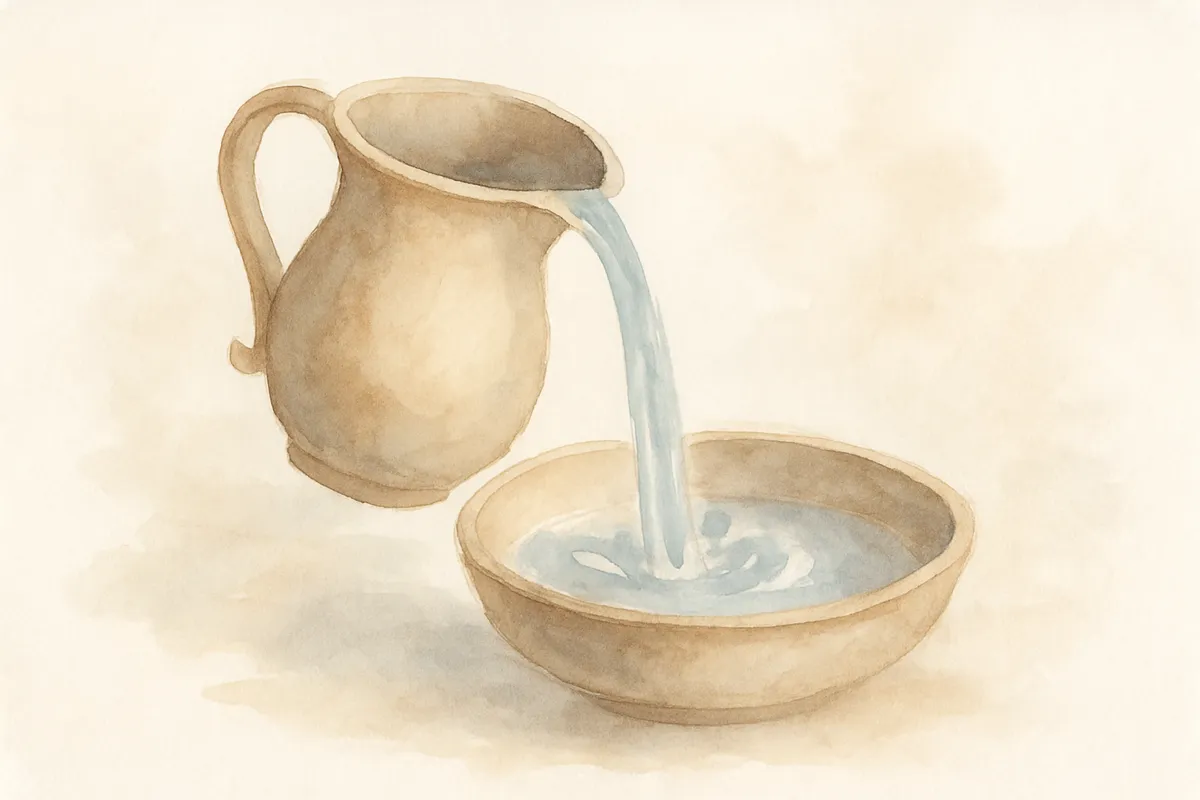
The netilat yadayim (ritual hand washing) prayer refers to the blessing recited after washing hands: "Baruch Atah Hashem, Elokeinu Melech HaOlam, asher kid'shanu b'mitzvotav v'tzivanu al netilat yadayim" — "Blessed are You, Lord our God, King of the universe, who has sanctified us with His commandments and commanded us concerning the washing of hands." This blessing is recited in multiple contexts throughout Jewish daily life, including upon waking in the morning, before eating bread, and after using the restroom.
Key Takeaways
- The netilat yadayim blessing is recited after washing hands, not during the washing itself.
- Morning hand washing (netilat yadayim shachrit) is one of the most important daily obligations, connected to spiritual purity upon waking.
- The blessing should be recited promptly after washing, without significant interruption.
- The water used for morning netilat yadayim has a special status and must be disposed of carefully.
- Modeh Ani, said immediately upon waking, does NOT require prior hand washing — but Torah study does.
The Text of the Blessing
The blessing recited is:
בָּרוּךְ אַתָּה ה' אֱלֹהֵינוּ מֶלֶךְ הָעוֹלָם, אֲשֶׁר קִדְּשָׁנוּ בְּמִצְוֹתָיו וְצִוָּנוּ עַל נְטִילַת יָדַיִם "Baruch Atah Hashem, Elokeinu Melech HaOlam, asher kid'shanu b'mitzvotav v'tzivanu al netilat yadayim." "Blessed are You, Lord our God, King of the universe, who has sanctified us with His commandments and commanded us concerning the lifting/washing of the hands."
When Is the Blessing Recited?
Timing of the Blessing
[Sefer HaYirah 36] rules explicitly: "He should recite the al netilat yadayim blessing when he dries his hands, not when he washes them." This reflects the principle that the blessing accompanies the completion of the act.
Reciting Without Interruption
The Mishnah Berurah emphasizes that the blessing must be recited promptly after washing, without significant interruptions [Mishnah Berurah 6:8]. He notes:
"If he will be learning after he washes, and certainly if he interrupts with idle conversation, and then goes to shul and recites the Al Netilat Yadayim blessing there — everyone agrees that he did not do the right thing."
This means that those who recite Tehillim (Psalms) before saying the Al Netilat Yadayim blessing are not acting properly.
Contexts for Netilat Yadayim
1. Morning Hand Washing (Netilat Yadayim Shachrit)
This is perhaps the most well-known context. Upon waking, one washes their hands as a form of spiritual purification, as the Kabbalistic tradition holds that an impure spiritual force (ruach ra'ah) rests on the hands overnight.
The Shulchan Arukh [Orach Chayim 4:8] rules that morning hand washing must be done into a vessel, not directly onto the ground:
"נְטִילַת יָדַיִם שַׁחֲרִית, אֵין נוֹטְלִין עַל גַּבֵּי קַרְקַע, אֶלָּא לְתוֹךְ כֶּלִי." "Morning hand washing — one does not wash onto the ground, but rather into a vessel."
2. The Special Status of Morning Washing Water
The Shulchan Arukh [Orach Chayim 4:9] further rules:
"מַיִם שֶׁל נְטִילַת יָדַיִם שַׁחֲרִית אָסוּר לֵהָנוֹת מֵהֶם. וְלֹא יִשְׁפְּכֵם בַּבַּיִת, וְלֹא בְּמָקוֹם שֶׁעוֹבְרִים שָׁם בְּנֵי אָדָם." "The water of morning hand washing is forbidden to derive benefit from. And one may not pour it out inside the house, nor in a place where people walk."
This reflects the serious halachic (legal) weight given to this morning ritual.
3. Before Torah Study
The Mishnah Berurah [1:8] clarifies an important distinction:
- Modeh Ani (the prayer of gratitude said immediately upon waking) may be said before washing hands, since it contains no Divine Name.
- However, Torah study requires prior hand washing and the recitation of Birchat HaTorah (blessings over Torah).
4. Selichot (Penitential Prayers)
The Mishnah Berurah [6:11] addresses the common custom of reciting Selichot (penitential prayers) before dawn during the Days of Repentance, noting the complex question of how people recite Torah verses before Al Netilat Yadayim and Birchat HaTorah have been said.
5. After Using the Restroom
The Talmud [Berakhot 60b] prescribes a prayer upon entering and exiting the restroom, after which Asher Yatzar (a blessing praising God for bodily functions) is recited — typically accompanied by hand washing as well.
Connection to Broader Torah Themes
The act of netilat yadayim reflects the Jewish ideal of bringing holiness into physical life. Just as the Kohanim (priests) washed their hands before Temple service [Exodus 30:19], ordinary Jews sanctify their daily activities — eating, waking, prayer — through ritual washing. The hands are seen as instruments of human action, and purifying them symbolizes dedicating one's deeds to God.
For personal guidance on the specific laws of netilat yadayim as they apply to your situation, consult your local rabbi or posek.
Sources
People Also Asked
Want to dig deeper?