What is the meaning of jewish prayer shawl?
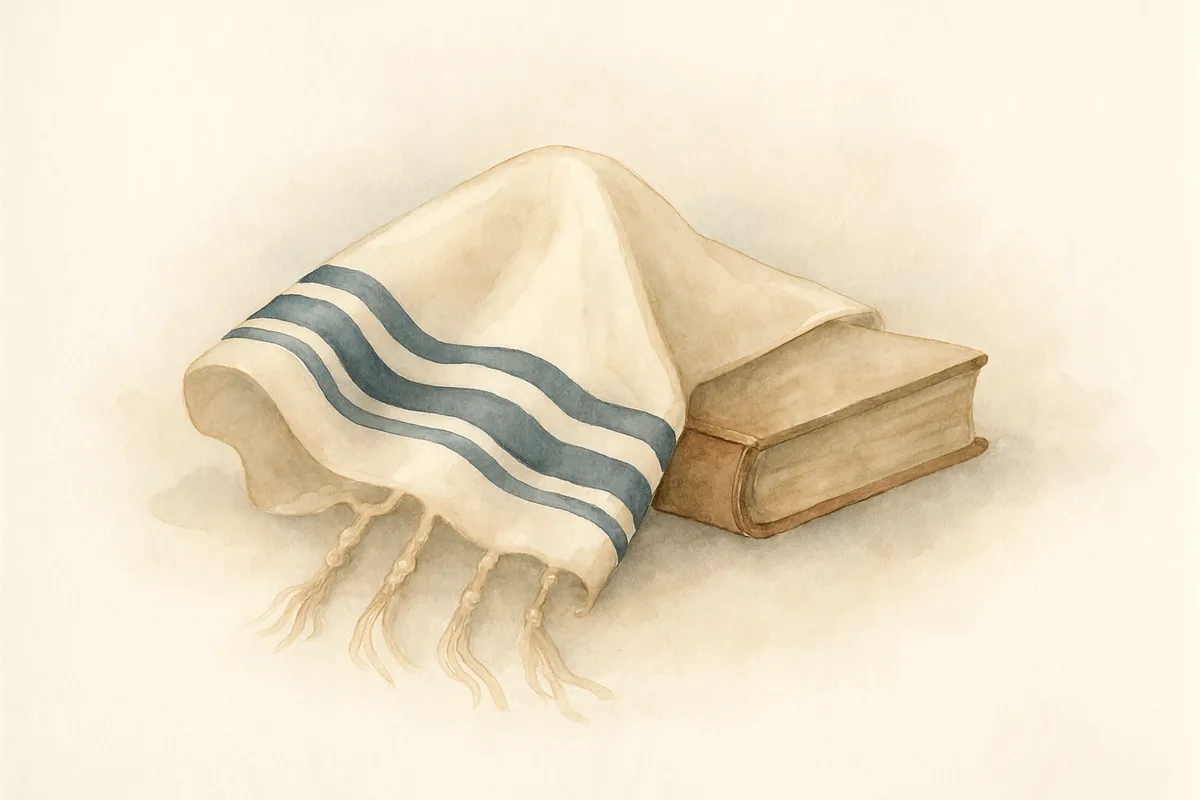
The Jewish prayer shawl, known as a tallit (טַלִּית), is a rectangular garment worn during prayer that holds knotted fringes called tzitzit (צִיצִית) attached to its four corners. Its primary purpose is not decorative but functional — the tzitzit serve as a visual reminder to observe all of God's commandments, as explicitly commanded in the Torah.
Key Takeaways
- The tallit is worn specifically to fulfill the biblical commandment of tzitzit — fringes on a four-cornered garment.
- The Torah states the tzitzit exist to remind the wearer of all of God's commandments and prevent following one's own heart and eyes.
- A thread of tekhelet (blue dye) was traditionally included in each corner, though its use was lost and has only recently been revived.
- Jewish law exempts women and minors from this commandment, though women may choose to wear a tallit.
- The tallit has no inherent holiness — its sanctity comes entirely from the tzitzit attached to it.
The Biblical Source
The commandment is stated clearly in the Torah [Numbers 15:38-39]:
"דַּבֵּר אֶל־בְּנֵי יִשְׂרָאֵל וְאָמַרְתָּ אֲלֵהֶם וְעָשׂוּ לָהֶם צִיצִת עַל־כַּנְפֵי בִגְדֵיהֶם לְדֹרֹתָם וְנָתְנוּ עַל־צִיצִת הַכָּנָף פְּתִיל תְּכֵלֶת" "Speak to the Children of Israel and say to them: they shall make for themselves fringes on the corners of their garments throughout their generations, and they shall place upon the fringe of each corner a thread of blue (tekhelet)."
The very next verse explains the purpose:
"וְהָיָה לָכֶם לְצִיצִת וּרְאִיתֶם אֹתוֹ וּזְכַרְתֶּם אֶת־כׇּל־מִצְוֺת יְהֹוָה" "And it shall be for you as fringes, and you shall see it and remember all the commandments of God and do them, and you shall not stray after your heart and your eyes."
This verse establishes the tallit and tzitzit as a spiritual instrument of mindfulness — a constant visual cue pointing the wearer toward God's will.
What the Tallit Is — and Isn't
The Rambam (Maimonides) makes an important distinction in his legal code [Mishneh Torah, Hilkhot Tzitzit 3:9]:
"נִפְסְקוּ לוֹ חוּטֵי לָבָן אוֹ תְּכֵלֶת זוֹרְקוֹ בָּאַשְׁפָּה מִפְּנֵי שֶׁהִיא מִצְוָה שֶׁאֵין בְּגוּפָהּ קְדֻשָּׁה" "If the white or blue threads broke, one may throw them in the garbage, because this is a commandment that has no inherent holiness in the object itself."
This is a profound teaching: the tallit is not a sacred object like a Torah scroll. Its entire significance derives from the mitzvah (commandment) it carries. Once the tzitzit are broken, the garment has no special status.
The Blue Thread — Tekhelet
The Torah required one thread of tekhelet, a specific blue dye, in each corner. The source of this dye (from the chilazon sea creature) was lost in antiquity, and for over a thousand years, tzitzit were made only with white threads. In recent generations, many authorities have identified the Murex trunculus snail as the source of tekhelet, and a growing number of Jews have returned to wearing it.
Who Is Obligated?
The Shulchan Arukh (the authoritative code of Jewish law) rules [Orach Chayim 17:2]:
"נָשִׁים וַעֲבָדִים פְּטוּרִים מִפְּנֵי שֶׁהִיא מִצְוַת עֲשֵׂה שֶׁהַזְּמַן גְּרָמָא" "Women and servants are exempt, because it is a time-bound positive commandment."
The exemption is because tzitzit is classified as a mitzvat aseh she'hazman grama — a positive, time-bound commandment (traditionally, tzitzit is a daytime obligation), from which women are generally exempt under rabbinic principle.
The Rema (Rabbi Moses Isserles), in his Ashkenazic gloss on the same passage, notes:
If women wish to wear a tallit and recite a blessing, they have the right to do so — as with other optional time-bound commandments — however, it may appear as yuhara (arrogance or pretension), and therefore it is not the common practice for women to do so.
This remains a topic of contemporary discussion, with Sephardic authorities generally discouraging women from wearing tzitzit at all, while some Modern Orthodox and liberal authorities permit or even encourage it.
Deeper Meaning — Spiritual Symbolism
Beyond the legal framework, the tallit carries rich symbolic meaning:
- Wrapping oneself in the tallit during prayer symbolizes being enveloped by God's presence — like being wrapped in Divine light.
- The 613 knots and windings of the tzitzit (in traditional counting) are said to correspond to the 613 commandments of the Torah.
- The Zohar and Kabbalistic tradition see the tallit as a garment of the soul, connecting the wearer to a higher spiritual reality.
- Some cover their heads with the tallit during the Amidah (standing prayer) to create a personal sacred space and foster concentration (kavanah).
For personal guidance on how to wear a tallit, when it is required, and related questions, consult your local rabbi or posek.
Sources
People Also Asked
Want to dig deeper?