What is the Kiddush (blessing over wine)?
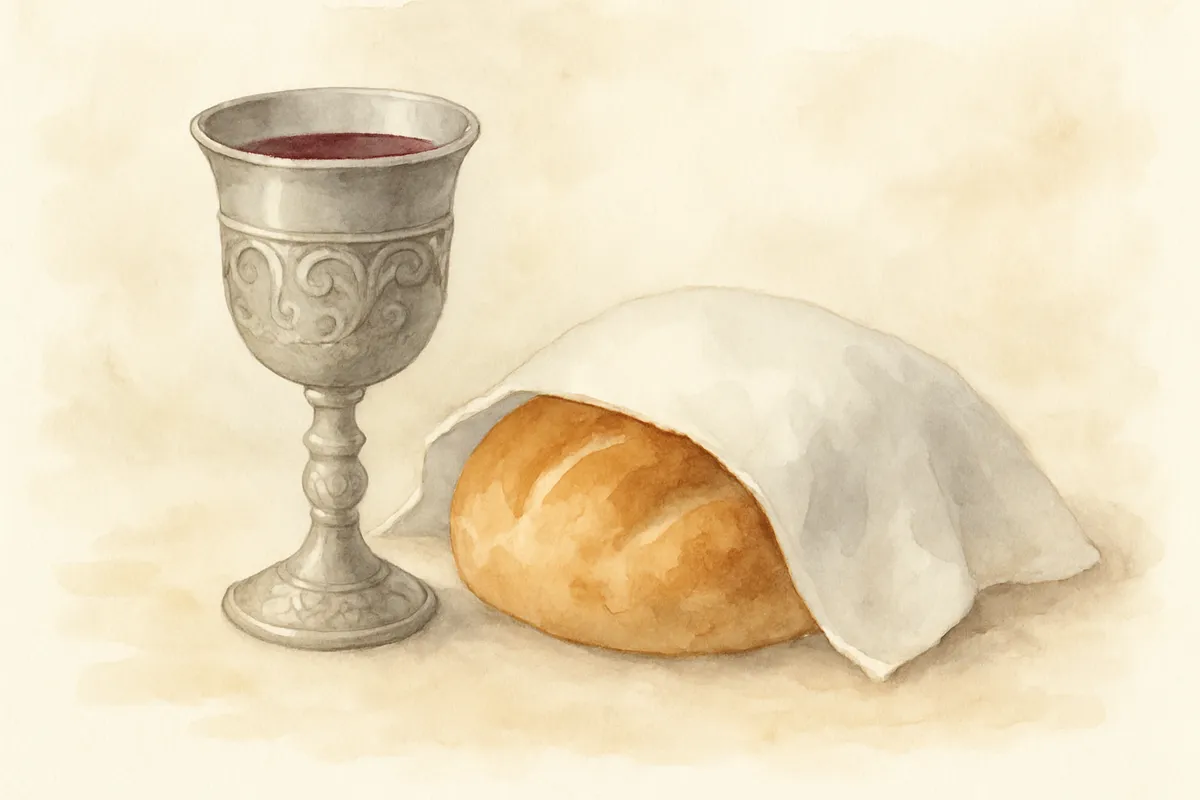
Kiddush (קידוש, literally "sanctification") is the formal declaration of the holiness of Shabbat or a Jewish holiday, recited over a cup of wine. It fulfills the Torah commandment to "remember" (zachor) the Shabbat day and sanctify it (Exodus 20:8), and wine serves as the vehicle for this sanctification because of its honorable and joyous character.
Key Takeaways
- Kiddush is a Torah-level commandment (mitzvat aseh — a positive commandment) to sanctify Shabbat and holidays verbally, performed over wine.
- It is recited twice: Friday night (Kiddush HaLailah) and Shabbat morning (Kiddush HaYom, also called Kiddusha Rabbah).
- Both men and women are obligated in Kiddush equally.
- If one forgets to recite Kiddush at night, it can be made up the following day.
- The principle of pirsumei nisa (publicizing a miracle) can sometimes override Kiddush in priority, as seen in Talmudic discussions about Chanukah candles.
The Biblical Source and Basic Obligation
The obligation of Kiddush derives from the verse: "זָכוֹר אֶת יוֹם הַשַּׁבָּת לְקַדְּשׁוֹ" — "Remember the Shabbat day to sanctify it" (Exodus 20:8).
The Rabbis derived from the word zachor ("remember") that this remembrance must be expressed verbally, and that it should be done over wine, which represents joy and honor [Pesachim 106a].
Who Is Obligated?
[Siddur Sefard, Shabbat Evening Meal, Shabbat Eve Kiddush 1] explicitly states:
"מצות עשה לקדש על היין בכניסת ש"ק. גם הנשים חייבות בקידוש היום" "It is a positive commandment to recite Kiddush over wine at the onset of Shabbat. Women are also obligated in Kiddush."
This is notable because Kiddush is a time-bound positive commandment (mitzvat aseh shehazman gerama), from which women are generally exempt — yet the Rabbis derived from textual reasoning that women share equal obligation here.
A minor (katan) cannot fulfill the obligation on behalf of women; therefore, a woman should recite Kiddush herself or recite each word along with the leader [Siddur Sefard, ibid.].
When Is Kiddush Recited?
Friday Night (Kiddush HaLailah)
The primary Kiddush, recited at the Friday night meal, contains:
- Vayechulu (Genesis 2:1-3) — the account of God resting on the seventh day
- The blessing over wine (Borei Pri HaGafen)
- The blessing of Mekadesh HaShabbat ("who sanctifies the Shabbat")
- On Yom Tov nights, the Shehecheyanu blessing is added
One may not eat or even drink water before reciting Kiddush [Siddur Sefard, ibid.].
Shabbat Morning (Kiddusha Rabbah)
A shorter Kiddush — called Kiddusha Rabbah (the "Great Kiddush," somewhat ironically, as it is actually briefer) — is recited before the daytime meal. It consists primarily of a few verses and the blessing over wine.
Making Up a Missed Kiddush
[Shulchan Aruch, Orach Chayyim 271:8] rules:
"If one did not make Kiddush at night — whether it was unintentional or intentional, he must make up for it the next day."
The Rema (Rabbi Moshe Isserles) adds that when making it up the next day, one recites the full text of the nighttime Kiddush except for Vayechulu, since that paragraph speaks specifically of the creation of the world and the onset of Shabbat night [Shulchan Aruch, OC 271:8; also confirmed in Siddur Sefard, ibid.].
Holiday Kiddush
For Yom Tov (Jewish holidays), the Kiddush text changes to reflect the theme of the specific holiday. [Mishneh Torah, Sabbath 29:19] (Rambam) provides the text, which praises God for:
"...choosing us from all peoples...and giving us, in love, appointed times for happiness, holidays and special times for joy..."
The specific holiday is named within the blessing — Pesach as "the season of our freedom," Shavuot as "the season of the giving of our Torah," Sukkot as "the season of our rejoicing."
Kiddush vs. Other Mitzvot: A Talmudic Debate
An important Talmudic passage highlights the weight of Kiddush relative to other obligations:
[Shabbat 23b] records Rava's analysis:
"נר חנוכה וקידוש היום מהו? קידוש היום עדיף דתדיר, או דילמא נר חנוכה עדיף משום פרסומי ניסא?" "If one can only afford either Chanukah candles or Kiddush wine — which takes priority? Does Kiddush take precedence because it is more frequent (tadir), or do Chanukah candles take precedence because of pirsumei nisa (publicizing the miracle)?"
Rava ultimately concludes: Chanukah candles take priority due to pirsumei nisa. This ruling is remarkable — it shows that even so fundamental a mitzvah as Kiddush can be deferred when the public declaration of God's miraculous intervention is at stake.
The same passage establishes that the peace of the home (shalom bayit) — having a lit home for Shabbat — takes priority over Kiddush wine when resources are limited.
Deeper Significance
On a drash (homiletical) level, Kiddush is not merely a legal formality. By reciting it, a Jew verbally testifies to the reality of creation and God's rest on the seventh day (through Vayechulu), effectively becoming a witness (ed) to divine truth. The Zohar (Parashat Vayakhel) teaches that one who recites Vayechulu on Friday night is considered as if they became a partner with God in the work of creation.
The requirement to recite Kiddush specifically over wine connects to the principle that mitzvot should be honored (hiddur mitzvah) with objects associated with joy and celebration.
For personal guidance on specific questions about Kiddush practice, consult your local rabbi or posek.
Sources
People Also Asked
Want to dig deeper?