What is the Hanukkah prayer and what are the blessings?
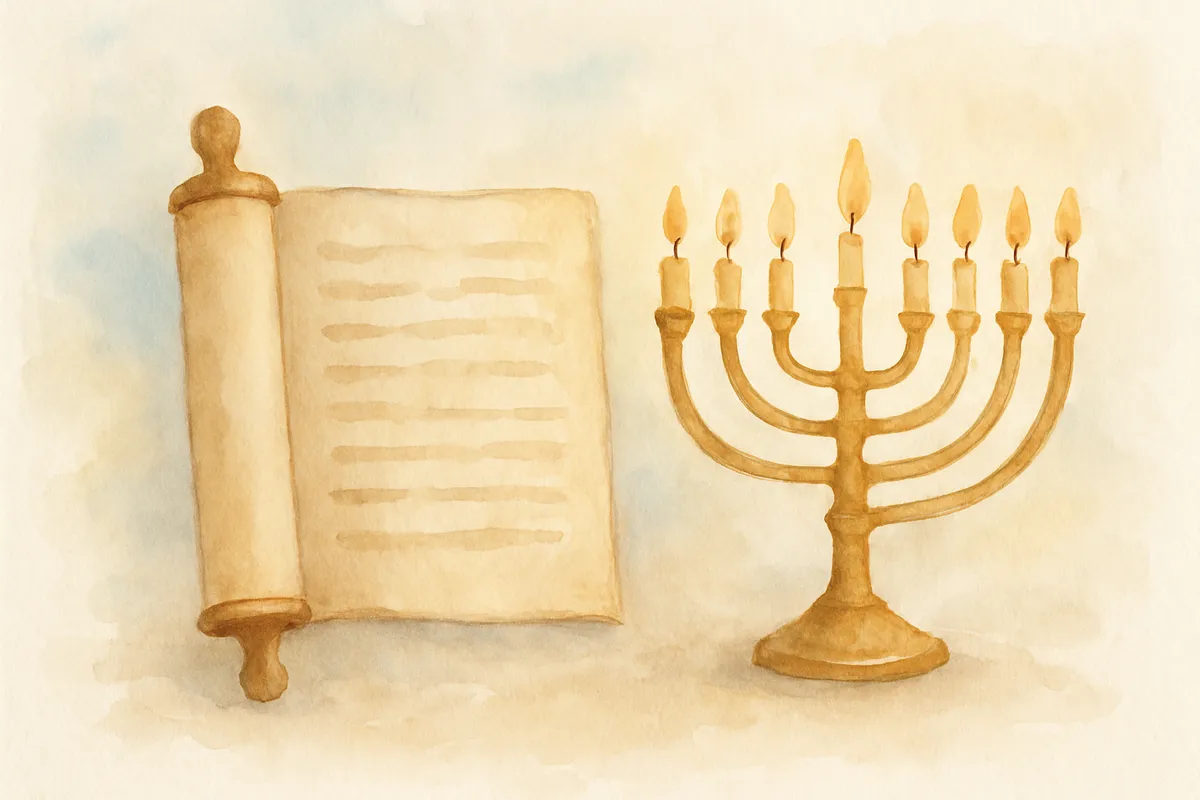
The Hanukkah Prayers and Blessings
Hanukkah features several prayers and blessings recited during the eight days of the holiday. The central ritual is the lighting of the Chanukiyah (Hanukkah menorah), over which two or three blessings are recited each night. Additional prayers — including Al HaNissim and Hallel — are woven into the daily liturgy throughout the holiday.
Key Takeaways
- Two blessings are recited every night of Hanukkah over the candles; a third blessing (Shehecheyanu) is added on the first night only.
- Al HaNissim ("For the Miracles") is inserted into the Amidah and Birkat HaMazon (Grace after Meals) throughout all eight days.
- Hallel (Psalms of praise) is recited in its complete form on all eight days of Hanukkah — unlike most holidays where Hallel is abbreviated.
- The prayer HaNerot Halalu is recited after lighting, explaining the purpose and holiness of the Hanukkah lights.
- The obligation of publicizing the miracle (pirsumei nisa) is the theological foundation for all Hanukkah prayers and rituals.
The Candle-Lighting Blessings
First Blessing: Lighting the Candles
בָּרוּךְ אַתָּה יְהֹוָה אֱלֹהֵינוּ מֶלֶךְ הָעוֹלָם אֲשֶׁר קִדְּשָׁנוּ בְּמִצְוֹתָיו וְצִוָּנוּ לְהַדְלִיק נֵר חֲנֻכָּה
Baruch Atah Adonai, Eloheinu Melech haolam, asher kidshanu b'mitzvotav v'tzivanu l'hadlik ner Chanukah.
"Blessed are You, Lord our God, King of the universe, who has sanctified us with His commandments and commanded us to kindle the Hanukkah light."
The Talmud discusses whether the blessing should be "ner Chanukah" (the Hanukkah light) or "ner shel Chanukah" — the accepted text uses ner Chanukah [Shabbat 23a].
Second Blessing: For the Miracles
בָּרוּךְ אַתָּה יְהֹוָה אֱלֹהֵינוּ מֶלֶךְ הָעוֹלָם שֶׁעָשָׂה נִסִּים לַאֲבוֹתֵינוּ בַּיָּמִים הָהֵם בַּזְּמַן הַזֶּה
Baruch Atah Adonai, Eloheinu Melech haolam, she'asah nissim la'avoteinu bayamim hahem baz'man hazeh.
"Blessed are You, Lord our God, King of the universe, who performed miracles for our ancestors in those days at this time."
This blessing connects the miracle of the past to our present moment — a core theme the Sefat Emet emphasizes: when Jews internalize a miracle with their souls, it becomes permanently embedded for all generations [Sefat Emet, Genesis, Vayeshev 8:4].
Third Blessing: Shehecheyanu (First Night Only)
בָּרוּךְ אַתָּה יְהֹוָה אֱלֹהֵינוּ מֶלֶךְ הָעוֹלָם שֶׁהֶחֱיָנוּ וְקִיְּמָנוּ וְהִגִּיעָנוּ לַזְּמַן הַזֶּה
Baruch Atah Adonai, Eloheinu Melech haolam, shehecheyanu v'kiy'manu v'higianu laz'man hazeh.
"Blessed are You, Lord our God, King of the universe, who has given us life, sustained us, and brought us to this season."
Shehecheyanu is the standard blessing of gratitude recited upon reaching a new holiday season for the first time. Some authorities rule it may also be said on the second night if one acquires a new chanukiyah [Mishnah Berurah 676:1].
HaNerot Halalu — After Lighting
After kindling the candles, HaNerot Halalu is recited:
"We kindle these lights for the miracles, the wonders, the salvations, and the battles which You performed for our forefathers in those days at this season through Your holy priests. During all eight days of Hanukkah, these lights are sacred, and we are not permitted to make ordinary use of them — only to look at them, in order to express thanks and praise to Your great Name for Your miracles, Your wonders, and Your salvations."
This declaration makes explicit the concept of pirsumei nisa — publicizing the miracle — which is the halachic engine behind all Hanukkah observance [Shabbat 21b].
Al HaNissim — The Prayer of Thanksgiving
Al HaNissim ("על הניסים") is inserted:
- Into the 17th blessing of the Amidah (the blessing of Hoda'ah/thanksgiving)
- Into Birkat HaMazon (Grace After Meals), in the Nodeh Lecha paragraph
The text recounts how God delivered the strong into the hands of the weak, the many into the hands of the few, the impure into the hands of the pure — and the establishment of Hanukkah as eight days of praise and thanksgiving.
The Talmud in [Shabbat 21b] records the halachic basis: "What is Hanukkah? The Rabbis taught: On the 25th of Kislev, eight days of Hanukkah begin, during which hesped (eulogies) and fasting are forbidden. For when the Greeks entered the Temple... and when the Hasmoneans prevailed... they found one flask of oil sealed with the seal of the High Priest... enough for one day. A miracle occurred and they lit from it for eight days."
If one forgets Al HaNissim:
- In the Amidah: one does not repeat the prayer [Shulchan Aruch, Orach Chaim 682:1]
- In Birkat HaMazon: one does not repeat, but may recite a supplementary paragraph [ibid.]
Hallel — Psalms of Praise
Full Hallel (Psalms 113–118) is recited on all eight days of Hanukkah during Shacharit (morning prayers). This is unusual — on most holidays (like the last days of Pesach), only half-Hallel is said.
The Talmud explains that on Hanukkah, full Hallel is appropriate because the miracle was complete and the days are each distinct in their mitzvah (adding a new candle each night) [Arachin 10a].
The Sefat Emet connects Hallel and thanksgiving directly to the creation of the holiday itself: "Through Hallel and hodaah (thanksgiving), they made these days into Yom Tov" — implying that the very act of praise is constitutive of the holiday's holiness [Sefat Emet, Vayeshev 8:4].
Maoz Tzur — The Hymn After Lighting
Maoz Tzur ("Rock of Ages") is a medieval liturgical poem traditionally sung after candle lighting in Ashkenazic communities
Sources
People Also Asked
Want to dig deeper?