What is kosher rules chicken and dairy?
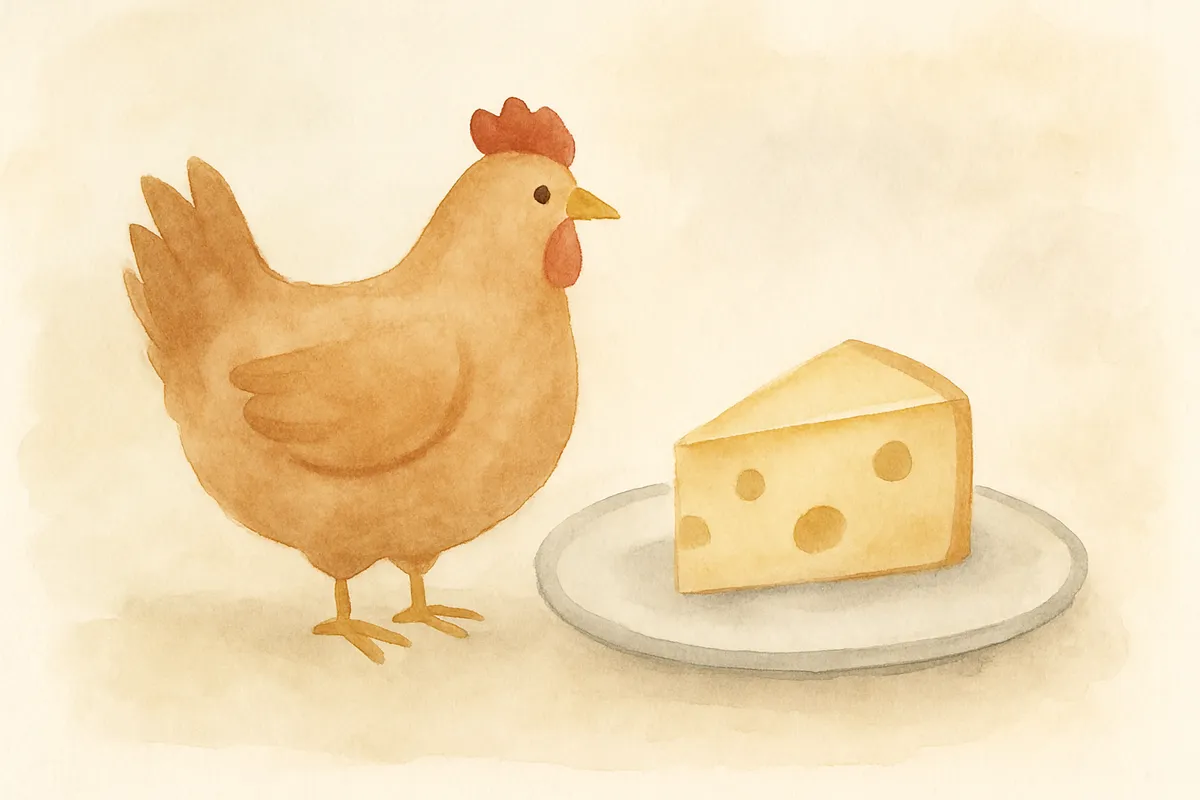
Chicken and dairy may not be cooked or eaten together under rabbinic Jewish law, though this prohibition is rabbinic (miderabbanan) rather than biblical (d'oraita). The Rabbis enacted this decree because poultry resembles meat in appearance, and they feared people would confuse it with actual meat-and-milk mixtures, which are forbidden by the Torah itself.
Key Takeaways
- The Torah's prohibition of mixing meat and milk (basar b'chalav) technically applies only to the flesh of kosher mammals, not poultry.
- The Rabbis nonetheless forbade chicken with dairy because poultry looks like meat and could cause confusion.
- Unlike with actual meat and milk, there is no prohibition of benefit (hana'ah) from chicken cooked with dairy.
- One may not serve chicken and cheese on the same table together, even without cooking them — a rabbinic decree upon a rabbinic decree.
- Almond milk or other non-dairy "milks" served alongside chicken require a visible marker (e.g., almonds placed beside the dish) to avoid the appearance of violation (mar'it ayin).
The Biblical Foundation: Meat and Milk
The Torah prohibits mixing meat and milk three times:
"לֹא תְבַשֵּׁל גְּדִי בַּחֲלֵב אִמּוֹ" — "You shall not boil a kid in its mother's milk." (Exodus 23:19, 34:26; Deuteronomy 14:21)
Through the Oral Tradition, this verse was interpreted to forbid:
- Cooking (bishul) meat and milk together
- Eating (achilah) them together
- Deriving benefit (hana'ah) from such a mixture
However, the received tradition (kabbalah) limits this biblical prohibition to the flesh of kosher mammals (behemah). [Sefer HaChinukh 454:1] explicitly states:
"כָּךְ קִבַּלְנוּ בְּפֵרוּשׁ לֹא תְבַשֵּׁל גְּדִי וְגוֹ' שֶׁבְּשַׂר בְּהֵמָה וְחַיָּה נֶאֶסְרוּ לְבַשֵּׁל בְּחָלָב, אֲבָל לֹא בְּשַׂר עוֹף"
"Thus we received in tradition that the verse 'do not cook a kid...' forbids cooking the flesh of domesticated and wild animals in milk — but not the flesh of poultry."
The Rabbinic Decree on Poultry
Why Did the Rabbis Forbid It?
The Sages issued a rabbinic decree (gezeirah) forbidding chicken with dairy. Their reasoning, recorded in the Talmud [Chullin 104a], is mar'it ayin — the "appearance to the eye." Chicken looks like red meat to an observer, and someone seeing a person eat chicken with cheese might conclude they were eating a biblically forbidden mixture.
[Peninei Halakhah, Kashrut 25:5:4] explains:
"בכל גזירות האכילה, השוו בשר עוף וחיה שאיסורם מדברי חכמים לבשר בהמה שאיסורו מהתורה, מפני שאם יקלו בעוף או חיה, יטעו להקל גם בבשר בהמה"
"In all eating decrees, the Rabbis equated poultry and wild animals (whose prohibition is rabbinic) with mammals (whose prohibition is biblical), because if people were lenient with poultry, they would come to be lenient with actual meat as well."
A Debate Among the Tannaim
The Talmud [Chullin 104a] records a dispute:
- Beit Shammai permitted eating chicken with cheese (though not cooking them together).
- Beit Hillel forbade even eating them together.
- The accepted halacha (psak) follows Beit Hillel: chicken and dairy may not be eaten together.
Is Chicken-Dairy Biblical or Rabbinic? A Halachic Debate
The Majority View: Rabbinic
The Shulchan Arukh (Yoreh De'ah 87:3) rules that poultry with dairy is rabbinic (miderabbanan) in nature.
[Siftei Kohen (Shach), Yoreh De'ah 87:4:1] strongly defends this position, arguing from the Talmud that many major poskim hold this view, and that even Mahara'i (R. Yisrael Isserlein) only said it was "difficult to be lenient" — not that it was biblically forbidden.
The Minority View: Biblical
Tosafot [Chullin 104a] and, following them, Maharshal (R. Shlomo Luria) and the Bach (R. Yoel Sirkis) maintained that chicken with dairy is a biblical prohibition.
[Siftei Kohen, Yoreh De'ah 87:4:1] notes their position but firmly maintains the rabbinic view is correct. [Sefer HaChinukh 454:1] uses this as an example — saying that claiming poultry-dairy is d'oraita would itself violate the prohibition of bal tosif (adding to the Torah's commandments), since the received tradition explicitly limits the biblical prohibition to mammals.
Practical Rules: What Is Forbidden and What Is Permitted
| Situation | Status | |---|---| | Cooking chicken in dairy | Forbidden (rabbinic) | | Eating chicken with dairy | Forbidden (rabbinic) | | Serving chicken and cheese at the same table | Forbidden (rabbinic decree upon rabbinic decree) | | Deriving benefit from chicken cooked in dairy | Permitted (unlike mammal meat-and-dairy) | | Chicken with almond/oat milk | Permitted, but requires a visible sign |
The Almond Milk / Non-Dairy Rule: Mar'it Ayin
A common practical question: may one serve chicken with almond milk, soy milk, or other non-dairy liquids that look like milk?
This is permitted, but with an important condition. The Rama (R. Moshe Isserles) rules in [Shulchan Arukh, Yoreh De'ah 87:4] that because the substance only resembles dairy, one should place a visible indicator — such as a few almonds next to the dish — to demonstrate to observers that it is not real milk.
[Turei Zahav (Taz), Yoreh De'ah 87:4] adds nuance: while the Maharshal thought even chicken-with-almond-milk required almonds placed nearby (drawing an analogy to fish blood), the Rama disagreed, since chicken-dairy is only rabbinic anyway. Nevertheless, the Taz recommends placing almonds l'chatchilah (ideally) even with chicken, as a best practice.
[Siftei Kohen, Yoreh De'ah 87:6:1] explains the underlying logic: where the underlying prohibition is biblical (as with mammal meat), we are more stringent about mar'it ayin, and almonds are required. For poultry with almond milk, many are lenient, though ideally one should still place a visible sign.
Waiting Between Chicken and Dairy
- After eating chicken, the custom is to wait before eating dairy. Most Ashkenazic authorities require waiting one hour; many Sephardic authorities also require waiting, though some permit rinsing the mouth and eating dairy sooner.
- After eating dairy, one may eat chicken after rinsing the mouth and eating a small amount of bread — no extended waiting is required.
*For personal guidance on specific situations — such as how long to wait, what to do if chicken and dairy were accidentally cooked together
Sources
People Also Asked
Want to dig deeper?