What is kippah and tallit?
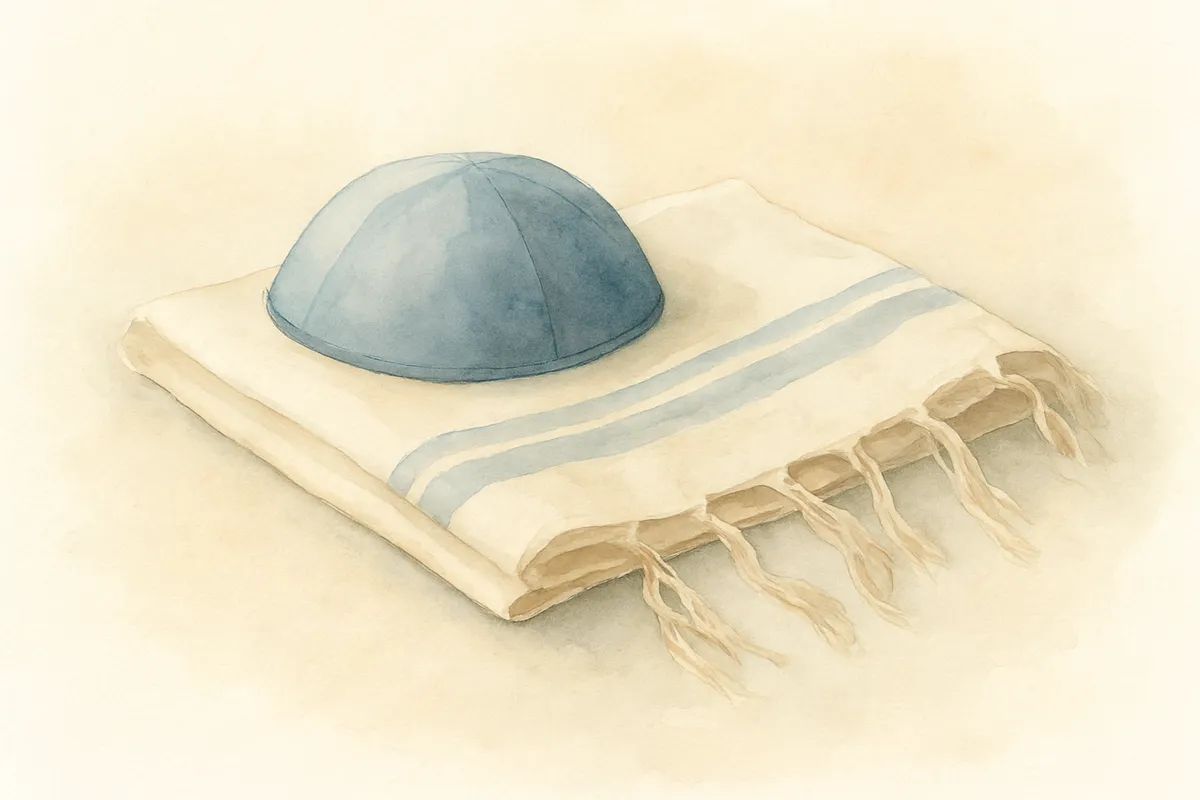
The kippah (כִּיפָּה, head covering) and tallit (טַלִּית, prayer shawl) are two of the most recognizable Jewish ritual garments. The kippah is a small head covering worn as a sign of reverence before God, while the tallit is a fringed garment worn during prayer, with the fringes (tzitzit) serving as a reminder to observe all of God's commandments.
Key Takeaways
- The tallit fulfills the Torah commandment of tzitzit (fringes), explicitly commanded in Numbers 15:38-39.
- The kippah is not explicitly mentioned in the Torah but is a deeply established custom (minhag) rooted in halachic sources and the Shulchan Aruch.
- Both garments serve as physical reminders of one's relationship with God and Jewish identity.
- The tzitzit on the tallit are specifically meant to prevent sinful behavior and keep one's heart and eyes from going astray.
- Halachic details vary between communities — consult your rabbi for personal practice.
The Kippah (Head Covering)
What It Is
The kippah (also called yarmulke in Yiddish) is a small cap worn on the head. The word kippah literally means "dome" or "vault" — which is also why the domed chamber in the Temple was called Beit HaMoked kippah [Mishnah Middot 1:8].
Sources and Basis
The Shulchan Aruch states:
"It is forbidden to walk with an upright, arrogant posture, and one should not walk four amot (cubits) with an uncovered head." [Shulchan Aruch, Orach Chaim 2:6]
This establishes that covering one's head is a matter of tzniut (modesty) and yirat Shamayim (fear of Heaven) — acknowledging that God is above us at all times.
Is It Biblically Required?
- The kippah is not explicitly commanded in the Torah. It is a minhag (custom) that became halachically binding over time.
- The Talmud [Shabbat 156b] records that Rav Nachman bar Yitzchak's mother was told to cover his head so that yirat Shamayim would come upon him — indicating the spiritual significance of head covering even in Talmudic times.
- The Shulchan Aruch [Orach Chaim 2:6] codifies it as obligatory practice, at least when walking in public.
Community Variations
- Ashkenazic, Sephardic, and Mizrachi communities all observe this practice, though styles differ.
- Some wear it only during prayer; most Orthodox men wear it at all times.
- The size, material, and style (knitted kippah srugah, black velvet, etc.) often signal communal or ideological affiliation.
The Tallit (Prayer Shawl)
What It Is
The tallit is a rectangular fringed garment, typically white with black or blue stripes, worn during morning prayer (Shacharit) and on special occasions like Kol Nidre on Yom Kippur.
The Biblical Source
The Torah commands tzitzit explicitly:
"דַּבֵּר אֶל־בְּנֵי יִשְׂרָאֵל וְאָמַרְתָּ אֲלֵהֶם וְעָשׂוּ לָהֶם צִיצִת עַל־כַּנְפֵי בִגְדֵיהֶם לְדֹרֹתָם וְנָתְנוּ עַל־צִיצִת הַכָּנָף פְּתִיל תְּכֵלֶת" "Speak to the Children of Israel and tell them to make for themselves fringes (tzitzit) on the corners of their garments throughout their generations, and to place on the fringe of each corner a thread of blue (techelet)." [Numbers 15:38]
The very next verse explains the purpose:
"וְהָיָה לָכֶם לְצִיצִת וּרְאִיתֶם אֹתוֹ וּזְכַרְתֶּם אֶת־כׇּל־מִצְוֺת יְהֹוָה וַעֲשִׂיתֶם אֹתָם וְלֹא־תָתוּרוּ אַחֲרֵי לְבַבְכֶם וְאַחֲרֵי עֵינֵיכֶם" "It shall be tzitzit for you, and when you see it, you will remember all the commandments of God and do them, and you will not stray after your heart and after your eyes." [Numbers 15:39]
Three Purposes of Tzitzit
The verse in Numbers teaches three interlocking functions:
- Visual reminder — seeing the fringes triggers memory of all the commandments.
- Behavioral guardrail — "you will not stray after your heart and after your eyes," preventing sin.
- Identity marker — the garment connects the wearer to the covenant community.
Techelet — The Blue Thread
- The Torah mandates a thread of techelet (blue dye from the chilazon sea creature).
- This dye was lost for centuries. Today, some authorities (following Rav Herzog and the Radziner Rebbe) hold that techelet has been rediscovered and encourage its use, while many communities still use only white threads.
Who Wears It and When
- Ashkenazic custom: Men begin wearing a tallit after marriage (or bar mitzvah, depending on community).
- Sephardic custom: Boys wear a tallit from bar mitzvah onward.
- Women are exempt from tzitzit as a time-bound positive commandment, though some women choose to wear one. This is a matter of ongoing halachic discussion.
- A tallit katan (small tallit) is worn under the clothes throughout the day to fulfill the mitzvah continuously.
The Deeper Meaning — Free Will and Observance
Rambam (Maimonides) emphasizes in his Mishneh Torah that human beings are given complete free will in their choices:
"כלומר שהרשות בידכם, וכל שיחפוץ האדם לעשות ממעשה בני האדם עושה — בין טובים בין רעים" "That is to say, the choice is in your hands, and whatever a person wishes to do among human actions, he does — whether good or evil." [Mishneh Torah, Repentance 5:3]
The kippah and tallit are thus not merely ritual objects — they are physical tools to support the exercise of free will toward good, helping us remember our obligations when our hearts and eyes might otherwise lead us astray.
For personal guidance on how to wear these garments or any specific halachic questions, consult your local rabbi or posek.
Sources
People Also Asked
Want to dig deeper?