What is jewish prayer wall?
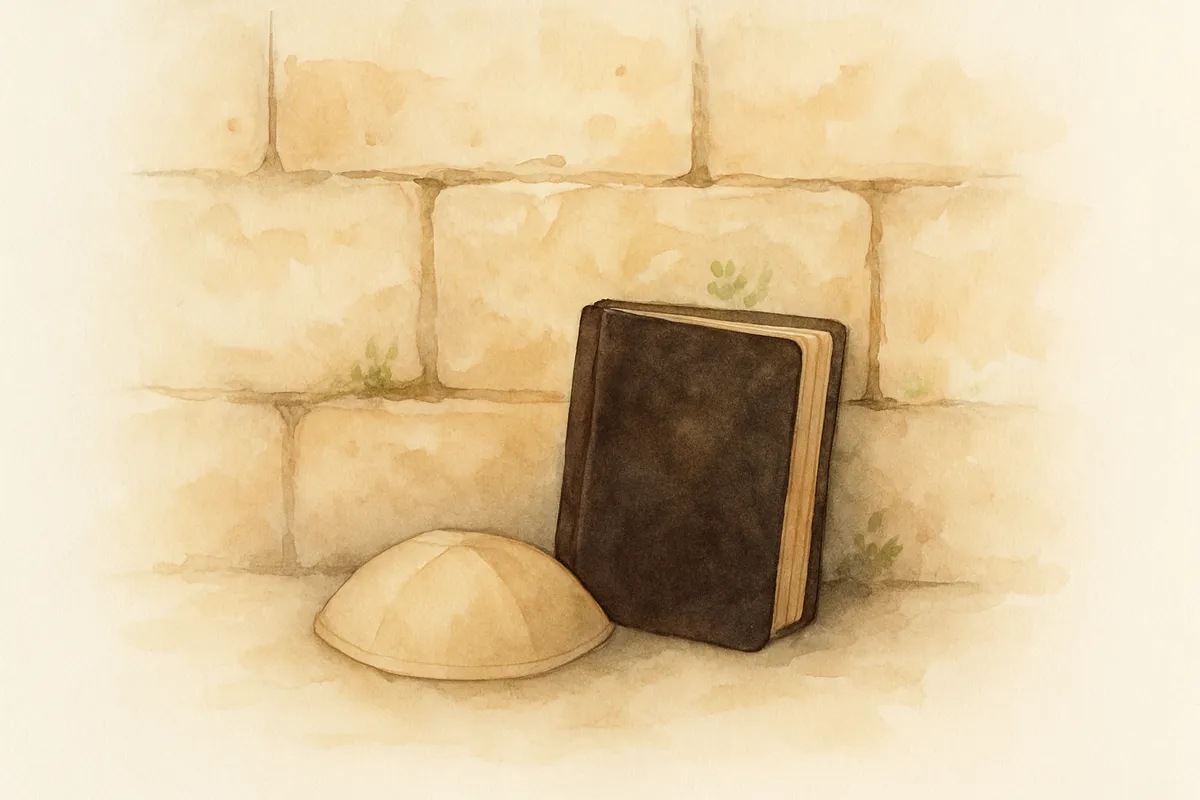
The Western Wall (Kotel HaMa'aravi, כֹּתֶל הַמַּעֲרָבִי) is the holiest accessible site in Judaism — a retaining wall from the Second Temple Mount in Jerusalem, built by King Herod around 19 BCE. It is considered the closest accessible point to the Holy of Holies (Kodesh HaKodashim), making it the most sacred place where Jews gather to pray.
Key Takeaways
- The Western Wall is a surviving retaining wall of the Temple Mount complex built by Herod the Great, not a wall of the Temple itself.
- It is considered the holiest accessible Jewish prayer site because of its proximity to where the Holy of Holies once stood.
- The Talmud teaches that the Shekhinah (Divine Presence) never departs from the Western Wall [Shemot Rabbah 2:2].
- A beloved custom is to insert written prayers (kvitlach) into the cracks of the Wall, reflecting the deeply personal nature of Jewish prayer.
- Since the Temple's destruction, prayer has taken on heightened importance as a substitute for Temple service.
Historical Background
The Temple Mount complex was constructed and expanded by King Herod around 19 BCE. After the Romans destroyed the Second Temple in 70 CE, the Western Wall (Kotel) remained as a partial retaining wall.
Over centuries, this site became the central focus of Jewish mourning for the Temple's destruction and of hope for its rebuilding.
It was historically also called the "Wailing Wall" by outsiders, reflecting the Jewish practice of lamenting the Temple's destruction there.
Religious Significance
The Shekhinah Never Departed
The Midrash states that God's presence (Shekhinah) never left the Western Wall, based on the verse in Song of Songs 2:9 — "He stands behind our wall" — interpreted as God remaining with His people even in exile [Shir HaShirim Rabbah 2:9].
This is why the Wall carries such enormous spiritual weight — it is seen as a direct "channel" to heaven.
Prayer as a Replacement for Temple Service
The destruction of the Temple transformed Jewish worship fundamentally. The Talmud [Berakhot 26b] records a dispute about whether the three daily prayers (Shacharit, Mincha, Maariv) were instituted by the Patriarchs or to correspond to the Temple offerings.
The verse from Deuteronomy captures the essence of this service:
"וּלְעׇבְד֔וֹ בְּכׇל־לְבַבְכֶ֖ם" — "And to serve Him with all your heart" [Deuteronomy 11:13].
The Sages interpreted "service of the heart" (avodah shebalev) as prayer itself [Ta'anit 2a].
The Gates of Prayer and Tears
The Ohr Zarua cites a profound Talmudic teaching [Berakhot 32b]:
"מיום שחרב בית המקדש ננעלו שערי תפלה... ואע"פ ששערי תפלה ננעלו שערי דמעה לא ננעלו" "From the day the Temple was destroyed, the gates of prayer were locked... but even though the gates of prayer were locked, the gates of tears were never locked." [Ohr Zarua, Vol. I, 102:1]
This is why the Wall is such a powerful place — it is where Jewish tears have been shed for nearly 2,000 years, and those gates, the Talmud promises, remain forever open.
The Custom of Written Prayers
One of the most well-known practices at the Kotel is placing written notes (kvitlach) containing personal prayers into the cracks of the Wall.
This practice reflects the verse from Psalms 69:14:
"וַאֲנִ֤י תְפִלָּֽתִי־לְךָ֨ יְהֹוָה עֵ֤ת רָצ֗וֹן" — "But as for me, my prayer is to You, O Lord, at a time of favor." [Psalms 69:14]
The notes are collected twice a year and buried on the Mount of Olives, as written prayers are given the sanctity of holy texts (genizah).
Moses and the Power of Prayer at the Wall
Interestingly, Moses himself prayed intensely to enter the Land of Israel — and his prayer is described in Deuteronomy 3:23:
"וָאֶתְחַנַּ֖ן אֶל־יְהֹוָ֑ה" — "And I pleaded (va'etchanan) with God." [Deuteronomy 3:23]
The Ohr Zarua [102:1] notes that Rabbi Elazar taught: "Prayer is greater than good deeds — for no one was greater in good deeds than Moses, yet he was only answered through prayer."
This teaches that no matter how righteous, every Jew must still turn to God in prayer — the essential message embodied by the Western Wall.
For personal guidance on matters of Jewish practice connected to visiting the Kotel, consult your local rabbi or posek.
Sources
People Also Asked
Want to dig deeper?