What is jewish blessing bread?
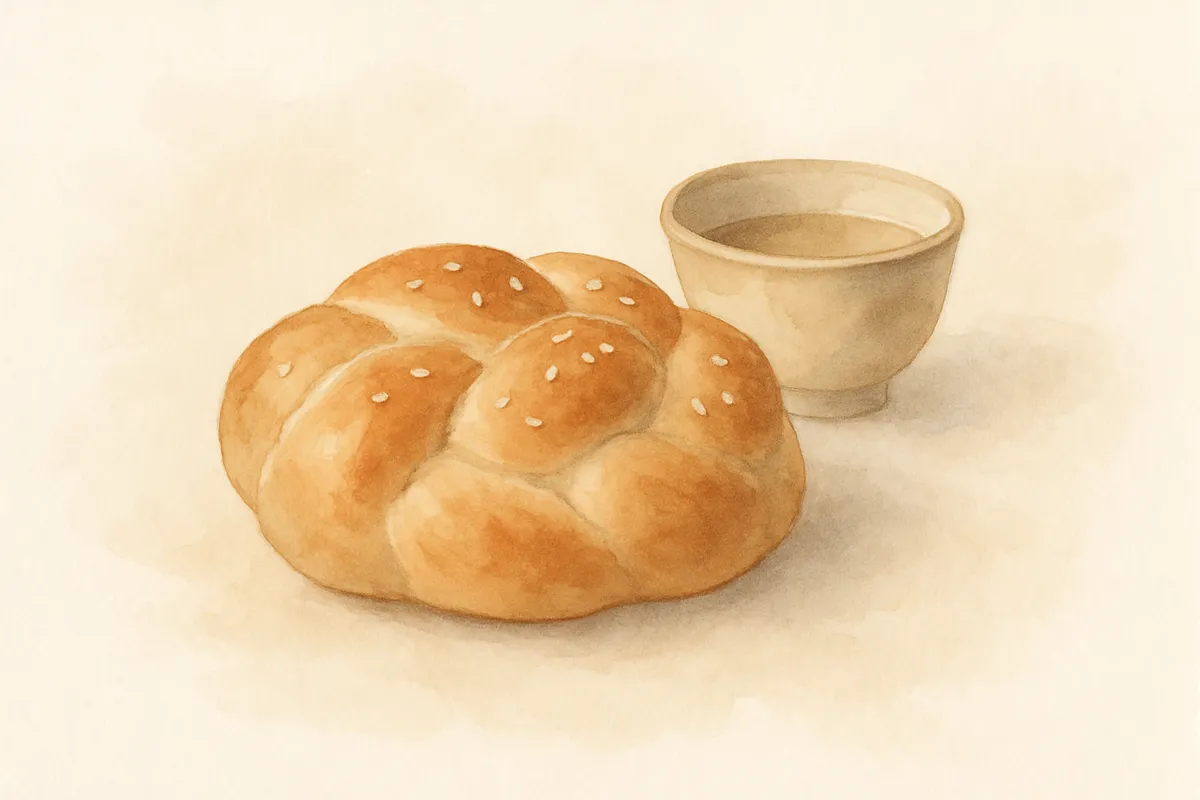
The Jewish blessing over bread is called HaMotzi, short for the full blessing: "Baruch Atah Hashem Eloheinu Melech HaOlam, HaMotzi Lechem Min HaAretz" — "Blessed are You, Lord our God, King of the Universe, Who brings forth bread from the earth." This blessing is recited before eating any bread made from wheat, barley, spelt, oats, or rye (the five grains), and it is one of the most central blessings in Jewish daily life.
Key Takeaways
- HaMotzi ("Who brings forth bread from the earth") is the blessing recited before eating bread made from the five grains.
- The blessing must be recited without interruption immediately before eating — pausing for unrelated speech requires repeating the blessing.
- HaMotzi is so significant that it exempts all other foods eaten during a formal meal from requiring their own separate blessing.
- On Shabbat and Jewish holidays, the blessing is recited over two whole loaves (lechem mishneh), symbolizing the double portion of manna in the desert.
- On Passover (Pesach), HaMotzi is recited over matzah instead of regular bread, with special customs applying.
The Text and Meaning of HaMotzi
The full blessing is:
ברוך אתה ה' אֱלֹהֵינוּ מֶלֶךְ הָעוֹלָם, הַמּוֹצִיא לֶחֶם מִן הָאָרֶץ "Baruch Atah Hashem Eloheinu Melech HaOlam, HaMotzi Lechem Min HaAretz" "Blessed are You, Lord our God, King of the Universe, Who brings forth bread from the earth."
This blessing is codified in [Mishnah Berakhot 6:1], which establishes a hierarchy of blessings for different foods. Bread occupies the highest position among food blessings because it is the staple of human life.
[Mishneh Torah, Laws of Blessings 3:2] states clearly:
"One who eats Pat (bread) is obligated to bless before it: Baruch Atah Hashem Eloheinu Melech HaOlam HaMotzi Lechem Min HaAretz. And after it, four blessings [i.e., Birkat HaMazon, Grace After Meals]."
Why Bread is Special
The Five Grains
HaMotzi applies specifically to bread baked from the five species of grain (chamisha minei dagan): wheat, barley, spelt, oats, and rye. Other foods have lesser blessings — for example, fruit from a tree receives Borei Peri HaEtz, and vegetables receive Borei Peri HaAdamah [Mishnah Berakhot 6:1].
Bread and Human Civilization
The [Midrash, Bereshit Rabbah 15:7] offers a striking insight — Rabbi Meir taught that the Tree of Knowledge in Eden may have been wheat, noting that a person without knowledge is said to have "never eaten wheat bread." This connects bread to human wisdom and civilization itself.
HaMotzi Exempts the Entire Meal
One of the most important laws of HaMotzi is that once recited, it exempts all other foods eaten during the meal from requiring their own blessing. The [Sefer HaChinukh 430:15] explains:
"From when he began to recite the blessing over the bread, the blessing over bread exempts anything that comes during the meal — whether they are things that nourish, such as the many cooked foods...or whether they are all other types of fruits in the world."
This makes HaMotzi uniquely powerful among food blessings.
Rules for Reciting HaMotzi
No Interruption Between Blessing and Eating
The [Mishneh Torah, Laws of Blessings 1:8] rules that no interruption may occur between the blessing and eating. However, speech related to the meal itself (such as "bring salt" or "give food to so-and-so") does not invalidate the blessing and need not be repeated.
Handwashing (Netilat Yadayim) Comes First
Before reciting HaMotzi, Jewish law requires ritual handwashing called Netilat Yadayim (lifting of the hands). The [Mishneh Torah, Laws of Leavened and Unleavened Bread 8:6] references this sequence at the Passover Seder — washing hands, then reciting HaMotzi.
HaMotzi on Shabbat and Holidays
On Shabbat and Jewish festivals (Yom Tov), the blessing is recited over two complete loaves of challah bread (lechem mishneh), commemorating the double portion of manna the Israelites received in the wilderness (Exodus 16:22).
On Passover, since leavened bread (chametz) is forbidden, HaMotzi is recited over matzah instead. The [Mishneh Torah, Laws of Leavened and Unleavened Bread 8:6] notes the special Passover custom: one matzah is broken (symbolizing Lechem Oni, the "bread of poverty") and the blessing is recited over the broken piece placed within a whole one.
The Spiritual Dimension
The [Sefer Chasidim 46:1] reminds us that blessings like HaMotzi should not be recited as mere habit, but with intentionality and mindfulness (kavanah). Eating itself should be "for the sake of Heaven" — to have strength to serve God — not merely for physical pleasure.
For personal guidance on the laws of blessings and HaMotzi, consult your local rabbi or posek.
Sources
People Also Asked
Want to dig deeper?