Touching the leaves of a small estrog tree on Shabbat
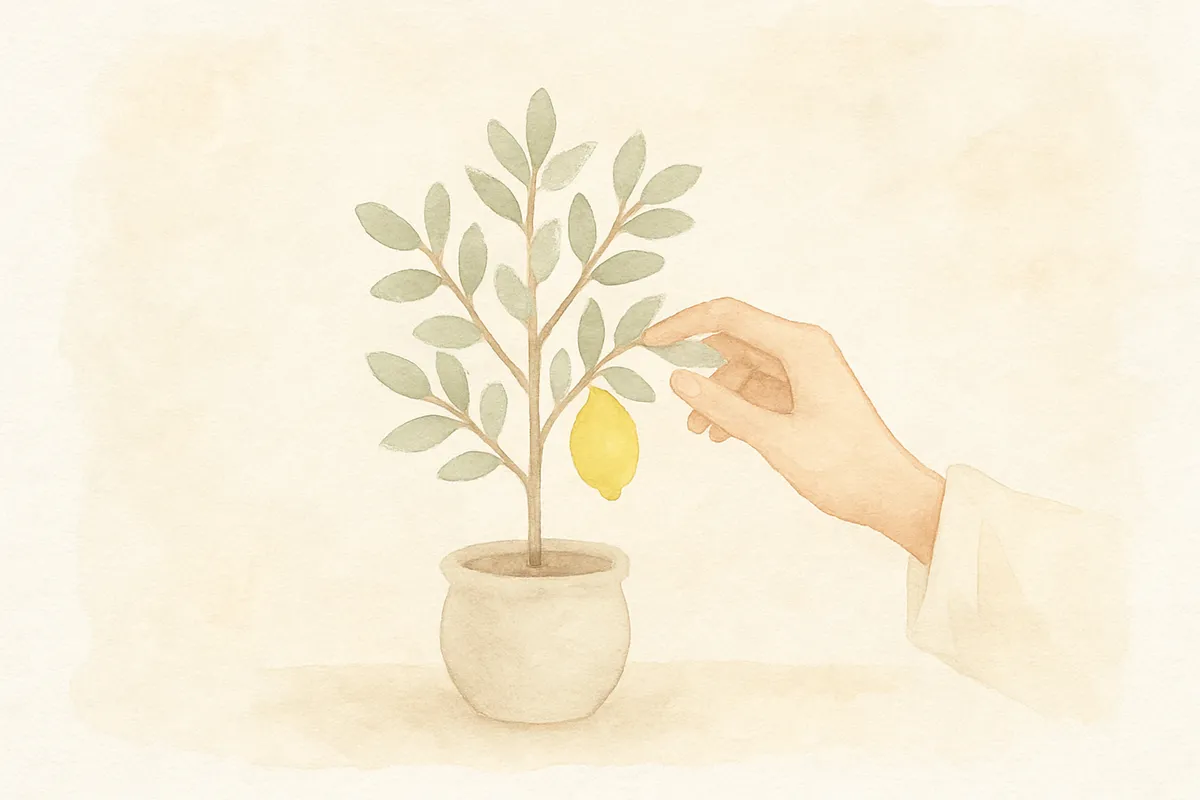
Touching the leaves of an etrog (citron) tree on Shabbat is primarily governed by the laws of muktzeh (items set aside/forbidden to handle on Shabbat) as they apply to trees and their parts. Touching — as distinct from moving — is generally permitted, but the full picture involves important nuances about detaching, shaking, and the nature of the tree itself.
Key Takeaways
- Merely touching leaves of a tree on Shabbat, without moving or detaching them, is generally permitted according to most authorities.
- Moving or shaking a tree so that fruit or leaves might fall is prohibited as it could lead to melacha (forbidden labor).
- The etrog tree is halachically significant, and its fruit has a special status discussed in both Talmud and Midrash.
- Detaching any leaf or fruit from a living tree on Shabbat is a Torah-level prohibition (melacha d'oraita) of kotzer (reaping/harvesting).
- Leaning on or pushing against a tree in a way that could cause parts to detach is rabbinically forbidden.
The Relevant Prohibitions
1. Kotzer — Detaching from a Living Plant
The Torah prohibition of kotzer (harvesting) is one of the 39 melachot (categories of forbidden labor) derived from the construction of the Tabernacle.
[Exodus 20:10]: "לֹא־תַעֲשֶׂה כׇל־מְלָאכָה" — "You shall do no manner of work" on the seventh day.
Any detaching of a leaf, fruit, or branch from a living tree — even unintentionally pulling one off — constitutes a Torah-level violation. This applies fully to an etrog tree.
2. The Rabbinic Decree Against Using Trees (Isur Shimush B'Ilan)
The Rabbis enacted a broad prohibition against making use of a tree on Shabbat and Yom Tov, derived in the Talmud:
[Beitzah 36b]: The Sages forbade climbing, using, or leaning heavily on a tree, lest one come to detach a branch or fruit.
This rabbinic fence (geder) was established to protect against accidentally violating kotzer.
3. Merely Touching — Is It Permitted?
Here is where the key distinction lies:
- Touching alone (without moving, shaking, or leaning weight on the tree) is not prohibited according to most poskim (halachic decisors). The rabbinic decree targets use of the tree, not incidental contact.
- [Shulchan Aruch, Orach Chaim 336:1] rules that one may not use a tree or even an object resting in a tree on Shabbat, but does not forbid mere touch.
- [Mishnah Berurah 336:1] clarifies that the concern is any action that might lead to detaching — passive touch is not the target of the decree.
So: if you lightly touch the leaves of a small etrog tree without shaking it, moving it, or risking detachment, most authorities would permit it.
4. The Small/Potted Etrog Tree — A Special Consideration
A small etrog tree raises additional questions, particularly if it is in a pot (atzitz):
- If the pot has a hole (and rests on soil), it is halachically treated like a tree in the ground — full muktzeh and kotzer concerns apply.
- If the pot has no hole, some authorities treat it more leniently regarding certain agricultural laws, but the Shabbat prohibition against detaching still applies.
- A small tree may be more susceptible to shaking when touched — so extra care is warranted.
5. The Etrog's Special Halachic Status
The etrog tree is notable in halachic literature:
[Leviticus 23:40]: "פְּרִי עֵץ הָדָר" — "the fruit of a beautiful/splendid tree"
The Sifra (Emor, Ch. 16:4) identifies this as the etrog specifically because "the taste of its wood resembles the taste of its fruit" — a unique botanical quality. [Source 5]
The Talmud [Rosh Hashanah 15b] also discusses the etrog's special status regarding shemita (sabbatical year) laws, noting that it follows the year of its growth rather than its harvest — further evidence of its unique halachic identity. [Source 6]
Practical Summary
| Action | Status | |---|---| | Lightly touching leaves | Generally permitted | | Shaking the tree | Rabbinically forbidden | | Detaching a leaf | Torah-level forbidden | | Moving a potted tree | Likely forbidden (muktzeh) | | Leaning on the tree | Rabbinically forbidden |
For personal guidance on your specific situation — especially regarding a potted tree or trees near a public area — consult your local rabbi or posek.
Sources
People Also Asked
Want to dig deeper?