The idea that a person’s good deeds walk before them and escort them after death
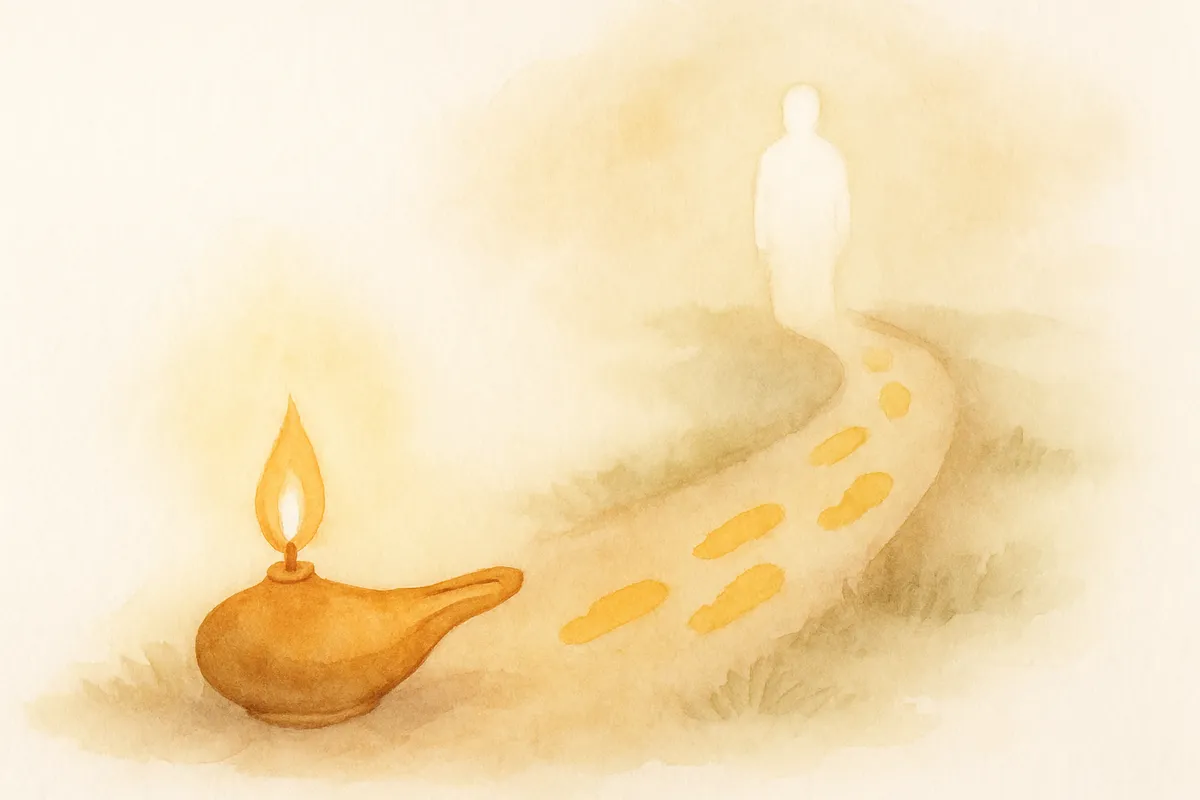
Good Deeds as Escorts After Death
The Torah tradition teaches that a person's good deeds — their mitzvot and ma'asim tovim (good deeds) — serve as both companions and advocates for the soul after death. This concept appears most explicitly in Pirkei Avot and related rabbinic literature, which teach that one's deeds create a lasting spiritual legacy that accompanies and defends the soul in the World to Come.
Key Takeaways
- Pirkei Avot 4:21 teaches that three negative forces "remove a person from the world" — implying by contrast that virtuous deeds keep a person anchored to eternal life.
- The Mishnah in Avot 5:18 establishes that one who brings merit to the many (mezakeh et ha-rabbim) has the merit of the multitude "hanging upon him" — an escort that endures.
- The Babylonian Talmud (Berakhot 17a) states that in the World to Come, the righteous sit with their crowns on their heads, sustained by the radiance of the Shekhinah (Divine Presence).
- The image of deeds as escorts is most vividly developed in the midrashic tradition, which describes three escorts that greet — or abandon — a person at death.
- This concept connects to the broader principle that mitzvot are not merely legal acts but create enduring spiritual realities.
The Core Rabbinic Teaching: Three Escorts at Death
The most famous formulation of this idea comes from Midrash Tanchuma and related sources, and is summarized in the Tosefta and later works:
Three accompany a person in this world: wealth, family, and good deeds. When a person departs from the world, wealth says "I cannot go with you." Family says "I cannot go with you." But good deeds say: "Wherever you go, I will go."
This teaching draws on the imagery of Ruth 1:16 — "wherever you go, I will go" — applying it metaphorically to ma'asim tovim as the only true loyal companion of the soul.
The Pirkei Avot Framework
Rabbi Elazar HaKappar in [Pirkei Avot 4:21] warns:
"הַקִּנְאָה וְהַתַּאֲוָה וְהַכָּבוֹד, מוֹצִיאִין אֶת הָאָדָם מִן הָעוֹלָם" "Jealousy, lust, and the pursuit of honor remove a person from the world."
The classical commentators — including Rabbi Ovadia of Bartenura and Rabbeinu Yonah — note this implies the inverse: that a person who avoids these vices and fills their life with mitzvot is not "removed" but rather carried into the World to Come by their deeds.
Deeds That Attach to the Many
[Pirkei Avot 5:18] deepens this idea significantly:
"כָּל הַמְזַכֶּה אֶת הָרַבִּים, אֵין חֵטְא בָּא עַל יָדוֹ" "Whoever brings merit to the many — sin does not come through his hand."
The Mishnah continues: "זְכוּת הָרַבִּים תָּלוּי בּוֹ" — "the merit of the many hangs upon him." Rashi and Rabbeinu Yonah explain this means the good deeds of everyone that person influenced continue to accumulate to their account even after death. The escort, in this case, is not just one's own deeds but an ever-growing convoy of spiritual merit.
The Talmudic Dimension: Deeds Before and After
The Babylonian Talmud [Sotah 3b] states that a mitzvah protects a person while they are engaged in it. More strikingly, [Sotah 21a] teaches:
A mitzvah protects and rescues — while one is doing it, it protects; after one has done it, it rescues.
This establishes a two-phase role for good deeds:
- During life: protection (shemirah)
- After death: advocacy and rescue (hatzalah)
The Image of Deeds "Walking Before" the Soul
The phrase "walking before" (holchim lefanav) echoes the language of Isaiah 58:8:
"וְהָלַךְ לְפָנֶיךָ צִדְקֶךָ" "Your righteousness (tzidkecha) shall walk before you."
Rashi [Isaiah 58:8] interprets this as the accumulated acts of tzedakah (charity) and justice becoming a vanguard for the soul — literally preceding it into judgment and pleading its case.
The Zohar [Zohar, Vayechi] elaborates on this mystically: after death, the soul is escorted through the spiritual realms by the "garments" (levushim) it wove during its lifetime through mitzvot. These garments are luminous and protect the soul as it ascends.
The Contrast: What Cannot Escort You
Rabbi Yosei ben Kisma in [Pirkei Avot 6:9] famously rejects an offer of "אֶלֶף אֲלָפִים דִּינְרֵי זָהָב" — "a million gold dinars" — to leave his Torah community, declaring that only Torah and good deeds accompany a person at the final hour. This story illustrates concretely what wealth cannot do — it cannot serve as an escort — while Torah and mitzvot can.
Practical and Ethical Implications
This teaching has profound implications for how one lives:
- Every mitzvah matters — each act adds to the escort that will accompany you.
- Influencing others multiplies your escort exponentially, as their deeds join yours [Avot 5:18].
- Repentance (teshuva) before death is critical — as [Avot 5:18] warns, one who leads others to sin cannot easily repent, losing this escort.
The Chofetz Chaim and other Mussar masters used this teaching as a central motivational tool: live as if every deed is being woven into the garment your soul will wear forever.
For personal guidance on halachic or spiritual matters arising from these teachings, consult your local rabbi or posek.
Sources
People Also Asked
Want to dig deeper?