Rosh Hashana Insights
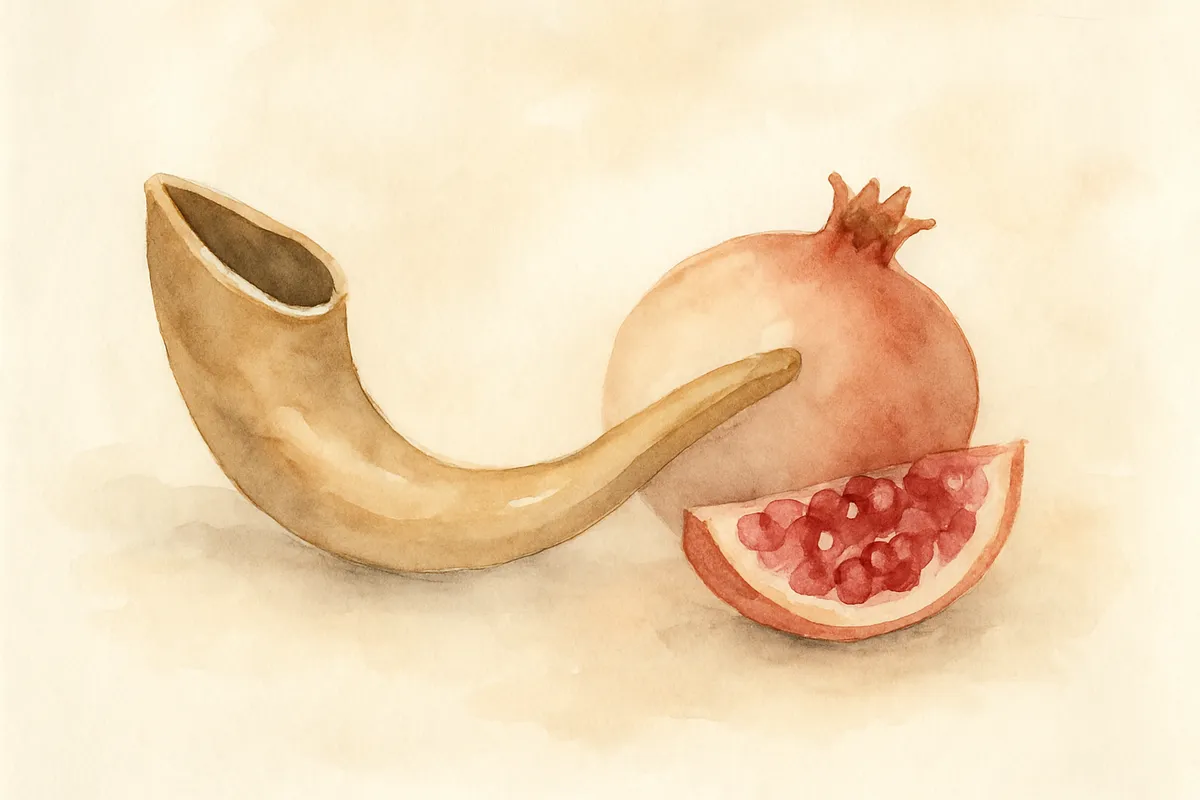
Meaningful Insights for Rosh Hashanah — Family Study Group
Rosh Hashanah is far more than a Jewish New Year celebration — it is the annual cosmic moment of Din (divine judgment) and Chidush (renewal), when every soul stands before the King of Kings and the entire world is re-evaluated. The holiday is simultaneously awe-inspiring and deeply personal, combining themes of kingship, memory, and transformation.
Key Takeaways
- Rosh Hashanah is the "birthday of the world" (Yom Harat Olam) — a day to reconnect with your fundamental purpose as a human being.
- The shofar blast cuts through our spiritual numbness and wakes us up to what truly matters.
- The day is not just about fear of judgment but about joyfully re-crowning God as King.
- Unetaneh Tokef teaches that teshuva, tefilla, and tzedaka can transform the heavenly decree.
- Rosh Hashanah is a day of memory — God "remembers" us, and we must remember who we truly are.
Insight 1: There Are Many "New Years" — But Only One That Counts for the Soul
The Mishnah opens tractate Rosh Hashanah with a remarkable teaching:
"אַרְבָּעָה רָאשֵׁי שָׁנִים הֵם" — "There are four new years" [Mishnah Rosh Hashanah 1:1]
The Mishnah lists four different new years: 1 Nisan for kings and festivals, 1 Elul for animal tithes, 1 Tishrei for years and shemita (sabbatical year), and 15 Shvat for trees.
The Deeper Question
Why does the world need four new years? The Maharal of Prague explains that different dimensions of creation operate on different rhythms. Trees have their season, animals have theirs, nations have theirs — and human souls have theirs.
1 Tishrei is the new year of the soul.
Personal Application
Ask yourself: In how many areas of your life are you running on autopilot? We often reset our finances in January, our diet after a birthday, our work goals quarterly — but when do we truly reset ourselves? Rosh Hashanah is the one day designed specifically for the renewal of your deepest identity. Use it not just to ask "what do I want to accomplish?" but "who do I want to be?"
Insight 2: The Book is Open — And You Are Holding the Pen
The Unetaneh Tokef prayer, one of the most powerful liturgical poems in Jewish history, declares:
"בְּרֹאשׁ הַשָּׁנָה יִכָּתֵבוּן, וּבְיוֹם צוֹם כִּפּוּר יֵחָתֵמוּן" "On Rosh Hashanah it is written, and on Yom Kippur it is sealed — how many will pass and how many will be created, who will live and who will die..." [Unetaneh Tokef, Machzor Rosh Hashanah]
This is one of the most emotionally raw passages in all of Jewish liturgy.
The Crucial Ending
The prayer does NOT end in despair. After listing every possible fate — fire, water, famine, plague — it concludes:
"וּתְשׁוּבָה וּתְפִלָּה וּצְדָקָה מַעֲבִירִין אֶת רֹעַ הַגְּזֵרָה" "But Teshuva (repentance), Tefilla (prayer), and Tzedaka (charity) remove the evil of the decree."
A Striking Observation
Notice: the prayer does not say these three things cancel the decree. The word used is ma'avirin — they cause it to pass over or transform it. Rabbi Joseph B. Soloveitchik (the Rav) taught that even if the external circumstance cannot change, who we are in response to it absolutely can. Teshuva changes the person. Tefilla changes our relationship with God. Tzedaka changes how we relate to others.
Personal Application
Pick one concrete act in each of the three categories before Yom Kippur:
- Teshuva: Choose one relationship that needs repair and take the first step.
- Tefilla: Commit to one tefilla each day during the Aseret Yemei Teshuva (Ten Days of Repentance) said with full focus rather than rushing.
- Tzedaka: Give to a cause that actually costs you something — not just spare change.
Insight 3: The King Who Wants to Be Found
Rosh Hashanah is called Yom HaDin (the Day of Judgment) but also Yom HaMelech (the Day of Kingship). We spend the Musaf prayer of Rosh Hashanah reciting the Malchuyot — verses proclaiming God's kingship.
Rabbi Schneur Zalman of Liadi (the Baal HaTanya, founder of Chabad) offers a breathtaking metaphor:
A king who normally resides in his palace behind layers of guards and officials, once a year travels out to the fields to meet his people directly. In the field, anyone can approach the king — no appointment, no intermediary. The king receives them all with a smiling face.
This is Rosh Hashanah. The distance between you and God is at its smallest during Elul and Rosh Hashanah.
Why Do We Crown a King Who Is Already King?
Rashi [Rosh Hashanah 16a] and the Talmud explain that God desires our acknowledgment. This is not because He needs it — but because a king without subjects who accept his kingship is not fully a king in the relational sense. God wants a relationship, not just dominion.
Personal Application
Think about a relationship in your life where you are the "authority" — a parent, a manager, a teacher. Do the people under your care want to crown you as their leader, or do they merely comply? What would it take to be the kind of leader people choose to follow? Rosh Hashanah teaches that true kingship is earned through love, not fear.
Insight 4: The Shofar — A Cry Beyond Words
The Rambam (Maimonides) writes in Mishneh Torah (Hilchot Teshuva 3:4):
"Even though the blowing of the shofar on Rosh Hashanah is a divine decree, it contains an allusion: Wake up, wake up, you sleepers from your sleep! Search your deeds, return in repentance..."
The Talmud [Rosh Hashanah 16b] gives a more legal reason for the shofar — to confuse the Satan (the prosecuting angel). But the Rambam goes deeper: the shofar speaks to the part of us that cannot be reached by words.
The Three Sounds
- Tekiah — one long, clear blast: This is who I could be.
- Shevarim — three broken, weeping sounds: This is the brokenness I carry.
- Teruah — nine short, staccato blasts: This is my cry for help.
- Tekiah Gedolah — the final long blast: I am committing to change.
Personal Application
When you hear the shofar, don't just listen to it — let it find you. Allow yourself to feel whatever surfaces: grief over a lost year, gratitude for being alive, hope for who you might become. The shofar works precisely because it bypasses the rational defenses we use to avoid honest self-reckoning.
Insight 5: "HaRachaman" — God Wants to Give Us Good
Tucked into the Birkat Hamazon (Grace After Meals) on Rosh Hashanah is a quiet but powerful addition:
Sources
People Also Asked
Want to dig deeper?