Is a bracha required if changing to a different tallit katan for sleep at night
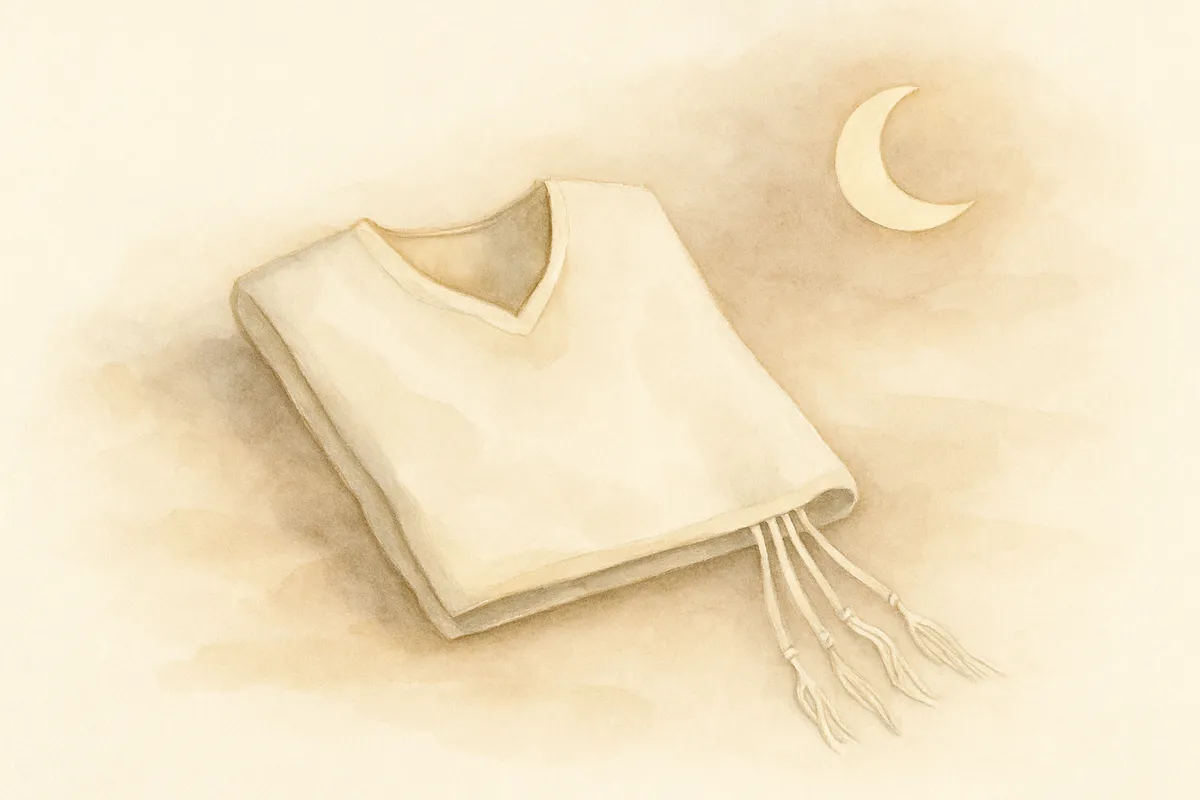
The question of whether a new bracha (blessing) is required when switching to a different tallit katan (small four-cornered garment) for sleep is a practical halachic question involving the laws of hesech ha-da'at (interruption of intent/attention). Generally, a new blessing is not required when switching to a different tallit katan for sleep, as the nighttime garment is considered a continuation of one's original intent to fulfill the mitzvah — though there are nuances depending on specific circumstances.
Key Takeaways
- The core issue is whether removing one tallit katan and putting on another constitutes a hesech ha-da'at (distraction of mind) that would require a new bracha.
- Most authorities hold that if one had in mind when making the original bracha to wear tzitzit throughout the day (and night), a new bracha is not required.
- If one explicitly removes the tallit katan with full intent to be done wearing it (not merely switching), this could constitute a hesech ha-da'at requiring a new blessing.
- Sleeping itself does not sever the obligation — one who sleeps in a tallit katan does not recite a new bracha upon waking if they did not remove it.
- Many Sephardic authorities and the Mishnah Berurah lean toward not reciting a new blessing when switching garments, to avoid a bracha l'vatala (blessing in vain).
The Underlying Halachic Framework
The Mitzvah of Tzitzit at Night
The Torah commands tzitzit on four-cornered garments [Numbers 15:38-41]:
"וְעָשׂוּ לָהֶם צִיצִת עַל-כַּנְפֵי בִגְדֵיהֶם לְדֹרֹתָם" "They shall make for themselves fringes on the corners of their garments throughout their generations."
There is a well-known dispute whether tzitzit is a mitzvat asei she-ha-zman gerama (time-bound positive commandment) that does not apply at night. The Talmud [Menachot 43a] and Rambam hold that nighttime garments are technically exempt. Nevertheless, the widespread custom is to wear a tallit katan during the day, and many wear one at night as well for reasons of modesty and piety.
The Principle of Hesech Ha-Da'at
The key question when switching garments is hesech ha-da'at — whether one's original intention and blessing has been "interrupted." This concept is discussed in detail in:
- Shulchan Aruch, Orach Chaim 8:14–16 — rules that if one removes a tallit with intent to return and put it back on shortly, no new bracha is required. But if one removes it with no intent to return, a new bracha is needed when putting it back on.
- Mishnah Berurah 8:36 — clarifies that the key factor is intent at the time of removal, not merely the act of removal itself.
Switching Specifically to a Sleep Garment
When changing from a daytime tallit katan to a different one designated for sleep, several factors are relevant:
Opinions that no new bracha is required:
- Rav Moshe Feinstein (Igrot Moshe, Orach Chaim 4:3) — holds that switching from one tallit katan to another is comparable to removing and redonning the same garment, especially when the intent all along was to continue fulfilling the mitzvah. No new bracha is needed.
- The Aruch HaShulchan (Orach Chaim 8:24) similarly holds that switching garments of the same type without a full hesech ha-da'at does not require a new blessing.
- Since nighttime garments are technically exempt from tzitzit anyway, reciting a new bracha could risk being a bracha l'vatala.
Opinions that a new bracha may be warranted:
- Some authorities note that switching to a completely different garment — especially one designated for a different time period (night vs. day) — could constitute enough of an interruption to require a new bracha.
- The Kaf HaChaim (8:34) discusses this and notes that Sephardic custom is to be stringent about not making unnecessary blessings, so one should not recite a new bracha in a case of doubt.
Practical Ruling
The accepted practice among most poskim (halachic decisors) is:
- ✅ No new bracha when switching tallit katan for sleep, especially if you did not fully divest yourself with intent to stop wearing tzitzit.
- ✅ If there is genuine hesech ha-da'at (e.g., you removed it and spent a significant time without tzitzit before putting on the sleep garment), then a new bracha may be recited — but even then, many suggest reciting it without Shem u'Malchut (without God's Name) to avoid a potential bracha l'vatala.
- ✅ Some have the custom to recite the blessing on the morning tallit katan with intent to cover all garment changes throughout the day and night.
For personal guidance on your specific practice, consult your local rabbi or posek.
Sources
People Also Asked
Want to dig deeper?