If a person cant have children is he or she allowed to marry?
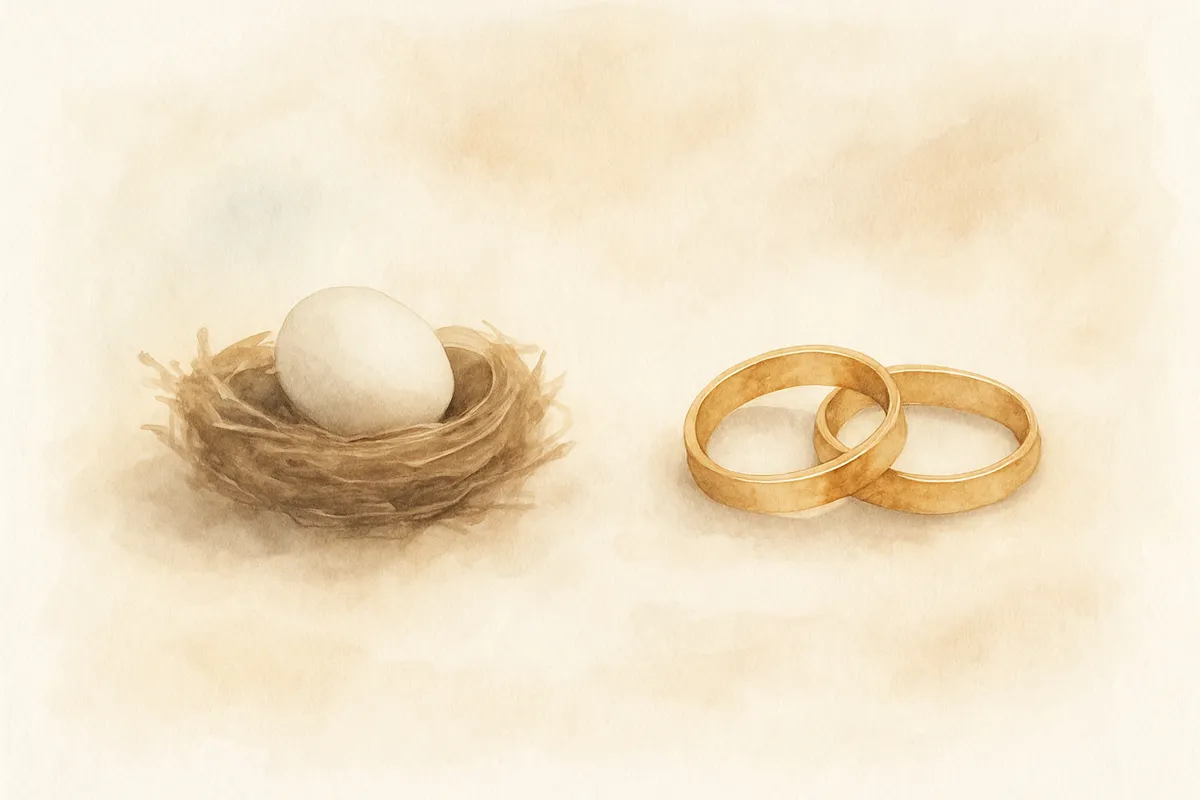
A person who cannot have children is generally permitted to marry in Jewish law, though there are important distinctions depending on gender and circumstances. The mitzvah (commandment) of peru u'revu (procreation) applies to men specifically, yet a man who is infertile or even incapable of reproduction is still allowed — and in fact encouraged — to marry, as marriage serves vital purposes beyond procreation alone.
Key Takeaways
- Both men and women are permitted to marry even if they cannot have children.
- The Torah commandment of peru u'revu (procreation) is obligatory upon men, but infertility does not prohibit marriage.
- A husband still has legal obligations to his wife — including she'er (sustenance), kesut (clothing), and onah (conjugal rights) — regardless of fertility [Exodus 21:10].
- Certain men with specific physical conditions (petzu'a daka) face restrictions from marrying born-Jewish women, but this is a narrow category with its own rules.
- Marriage in Jewish thought fulfills profound spiritual and companionship purposes entirely independent of procreation.
Detailed Answer
The Mitzvah of Procreation and Who It Applies To
The Torah commandment "peru u'revu" — "Be fruitful and multiply" [Genesis 1:28] — is the foundational basis for procreation in Jewish law. According to the Talmud [Yevamot 65b], this obligation falls primarily upon men, not women. This is derived by the Rabbis from the active/passive language of conquest and dominion in the verse.
However, being obligated in a mitzvah is separate from being permitted to marry. Infertility does not constitute a prohibition on marriage.
The Purpose of Marriage Beyond Procreation
The Torah itself establishes companionship as a core reason for marriage:
וַיֹּאמֶר יְהֹוָה אֱלֹהִים לֹא טוֹב הֱיוֹת הָאָדָם לְבַדּוֹ "And God said: It is not good for man to be alone" [Genesis 2:18]
From Adam and Eve's union [Genesis 2:21-24], the Rabbis derive that marriage is a fundamental human need — for companionship, emotional wholeness, and spiritual partnership — not merely for reproduction.
The Rambam (Maimonides) and other authorities affirm that a man should marry even if he has already fulfilled the mitzvah of procreation, or even if he cannot, because living without a wife leads to improper thoughts and incompleteness [Mishneh Torah, Hilchot Ishut 15:16].
The Ten-Year Rule
One relevant halachic discussion involves the case of infertility in marriage. Rashi on Genesis 16:3, cited in the Tur HaArokh, notes:
When a woman fails to conceive after 10 years of marriage, her husband may or should consider divorce and remarrying in order to pursue the mitzvah of procreation [Tur HaArokh, Genesis 16:3:1].
This rule — derived from Avraham and Sarai's situation — is discussed in [Yevamot 64a]. However, most contemporary poskim (halachic decisors) do not enforce this as a strict requirement, especially given modern fertility treatments. The emphasis today is on pursuing medical solutions first.
The Role of Medical Evaluation in Halacha
Regarding infertility specifically, halachic authorities note that:
"As evaluation of the male factors raises more halachic problems, a rabbinic determination should be obtained prior to embarking on this testing. Often rabbis will require that the basic, non-invasive tests be performed on the wife first." [A Lifetime Companion to the Laws of Jewish Family Life, Chapter 2]
This reflects how seriously halacha takes the topic — not to restrict marriage, but to guide couples through infertility with both medical and Torah-based wisdom.
The Narrow Case of Petzu'a Daka
The Torah [Deuteronomy 23:2] does restrict a man with certain specific physical injuries (petzu'a daka — wounds to reproductive organs) from marrying a born-Jewish woman (b'kahal Hashem). This is a narrow, specific prohibition and does not apply broadly to infertility caused by illness, age, genetics, or other medical conditions.
A woman faces no parallel Torah prohibition of this kind.
Women and Marriage Without Children
Women have no halachic prohibition on marrying due to infertility. The husband's obligation of onah (conjugal rights), she'er (food), and kesut (clothing) [Exodus 21:10] apply fully regardless of whether children can result. A woman's right to marriage and its companionship is fully intact.
Practical Guidance
For any specific situation — including questions about fertility treatments, the ten-year rule, or the petzu'a daka prohibition — consult your local rabbi or posek, as these questions involve nuanced personal circumstances that require individual halachic guidance.
Sources
People Also Asked
Want to dig deeper?