How are the Hebrew words for nothing and for the eyes related?
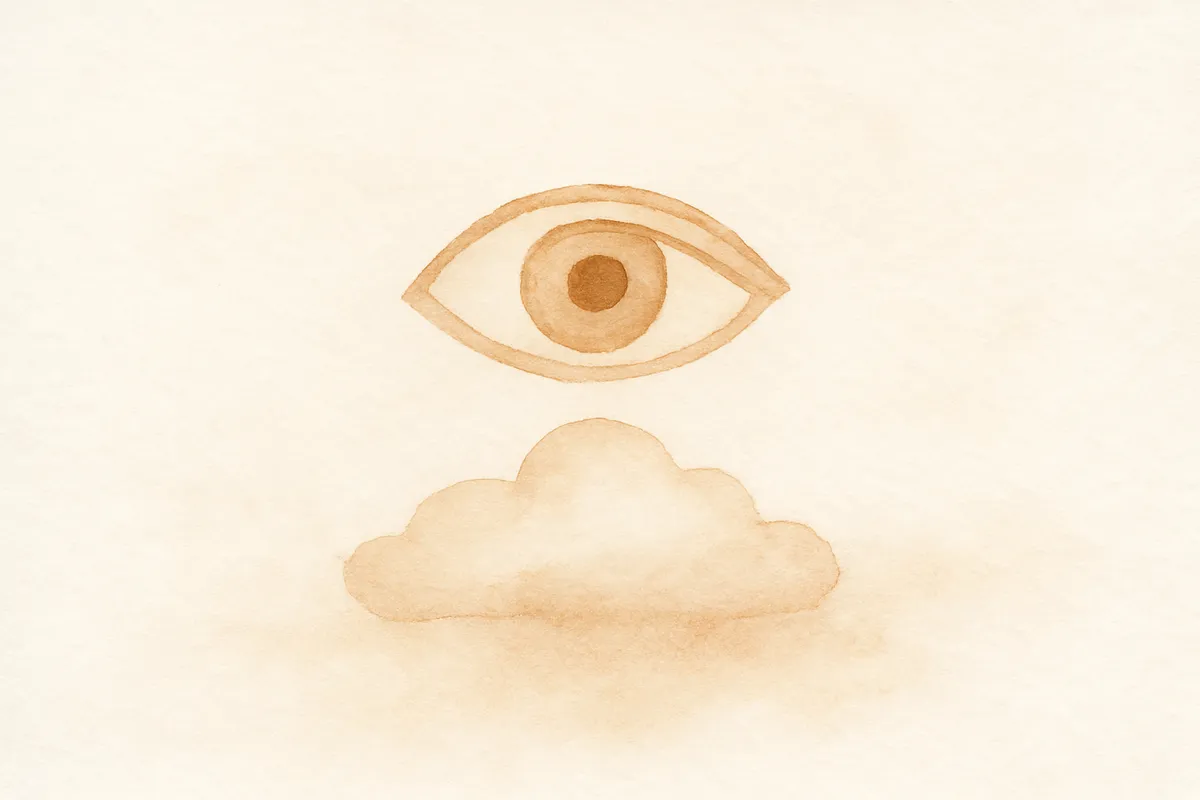
What a beautiful and penetrating question! This is a perfect example of how Hebrew etymology (shorashim — root words) reveals profound theological and philosophical meaning hidden within the language itself. Hebrew is unique among languages in that Jewish tradition considers it Lashon HaKodesh — the Holy Tongue — meaning its structure and word relationships are themselves carriers of divine wisdom.
Key Takeaways
- The Hebrew words for "nothing/nothingness" (ayin — אַיִן) and "eye/eyes" (ayin — עַיִן) are identical in spelling and pronunciation — one of the most philosophically charged homonyms in the entire Hebrew language.
- This is not considered coincidental in Jewish tradition — the Kabbalistic and Chassidic literature extensively explores this identity as carrying deep spiritual meaning.
- Ayin as nothingness refers to the highest level of divine reality — the Ein Sof and the Sefirah of Keter — where God transcends all definition.
- Ayin as eye represents divine perception and consciousness — God's all-seeing awareness that paradoxically emanates from the place of nothingness.
- This word-identity is understood in Chassidic thought as teaching that true perception (ayin/eye) requires first passing through self-nullification (ayin/nothingness).
The Basic Linguistic Fact
Two Words — One Spelling
In Hebrew, both words are spelled identically:
עַיִן
- As "eye" (plural: einayim עֵינַיִם) — the physical organ of sight, or metaphorically, perception and consciousness
- As "nothing/nothingness" (also written אַיִן with an aleph in some contexts) — non-existence, void, the absence of being
The word Ein (אֵין) — meaning "there is not" or "nothing" — shares this same root, appearing in the foundational Kabbalistic term Ein Sof (אֵין סוֹף) — "Without End" or "The Infinite" — the name for God's utterly transcendent, unknowable essence.
The Aleph/Ayin Distinction
A careful note for precision:
- "Eye" is spelled with Ayin (ע) — עַיִן — a guttural Hebrew letter
- "Nothing" is sometimes spelled with Aleph (א) — אַיִן — a softer glottal letter
However — and this is crucial — in many contexts and manuscripts both words appear spelled with Ayin (ע), and the Kabbalistic literature deliberately treats them as identical. The Zohar and Chassidic masters consistently exploit this identity as intentional divine wordplay embedded in the Holy Tongue.
The Kabbalistic Meaning of Ayin as Nothingness
Ayin — The Divine Nothingness
In Kabbalah, Ayin (nothingness) is not a negative concept — it is one of the most exalted descriptions of divine reality. It refers to that level of God which so utterly transcends all human categories that from our perspective it appears as "nothing" — not because it lacks being but because it surpasses all being we can conceive of.
The Zohar [Zohar, Bereishit 1a] establishes:
"The most hidden of all hidden things is called Ayin — Nothingness"
This is not the nothingness of absence — it is the nothingness of infinite fullness that transcends definition.
The Sefirah of Keter — The Crown of Nothingness
In the Kabbalistic Sefirot structure:
- Keter (Crown) — the highest Sefirah — is associated with Ayin
- It represents the level of divinity that is pure will and consciousness before any differentiation
- From Keter flows Chochmah (Wisdom) — which the Zohar describes as emerging from Ayin:
יֵשׁ מֵאַיִן "Yesh me'Ayin" — "Something from Nothing"
This is the Kabbalistic description of creation — existence (Yesh) emerging from divine Nothingness (Ayin).
The Tanya [Rabbi Schneur Zalman of Liadi, Sha'ar HaYichud VeHaEmunah, Chapter 2] explains:
"All created existence is literally nothing compared to the divine creative force that continuously brings it into being — the Ayin is the true reality, and the Yesh (something) is the apparent reality"
The Kabbalistic Meaning of Ayin as Eye
The Divine Eye — Ayin HaShem
The Torah itself uses the imagery of God's eye as His instrument of intimate providential care:
עֵינֵי יְהֹוָה אֶל־צַדִּיקִים "The eyes of God are toward the righteous" [Psalms 34:16]
הִנֵּה עֵין יְהֹוָה אֶל־יְרֵאָיו "Behold the eye of God is toward those who fear Him" [Psalms 33:18]
The divine eye in these verses represents:
- God's intimate personal providence (hashgachah pratit)
- His omniscient awareness that perceives all reality simultaneously
- His loving attention directed toward those who seek Him
Ayin HaRa and Ayin Tova
The same word ayin (eye) generates two of the most important ethical concepts in Jewish thought:
- Ayin Tova (עַיִן טוֹבָה) — "Good Eye" — generosity of spirit, seeing the best in others and in the world
- Ayin Ra (עַיִן רָעָה) — "Evil Eye" — jealousy, meanness of spirit, seeing the world through lack
The Mishnah in Pirkei Avot [Avot 2:9] records that when Rabbi Yochanan ben Zakkai asked his students what is the best path for a person to follow, Rabbi Eliezer answered:
עַיִן טוֹבָה "A good eye"
And the worst path to avoid:
עַיִן רָעָה "An evil eye"
The Bartenura [commentary on Avot 2:9] explains that ayin tova represents an entire orientation toward existence — seeing the world through the lens of generosity, sufficiency, and divine goodness.
The Deep Connection — Why Are They the Same Word?
The Chassidic Teaching: Perception Requires Nullification
This is where the deepest wisdom emerges. The Baal Shem Tov (Rabbi Israel ben Eliezer, founder of Chassidism, 1698-1760) and his students taught extensively on why eye and nothingness share the same word.
The teaching works on multiple levels:
Level One — Physical Sight Itself
Rabbi Levi Yitzchak of Berditchev (Kedushat Levi, Bereishit) observed that the physical eye itself demonstrates the principle:
- The part of the eye through which we actually see — the pupil — is in Hebrew called:
Bat Ayin — בַּת עַיִן — literally "daughter of the eye"
- But the pupil itself appears black — visually, it appears as a void, a darkness, a nothingness
- Yet paradoxically, this point of apparent nothingness is the precise point through which all vision occurs
The eye sees through its point of nothingness. Vision emerges from the void.
Level Two — Spiritual Perception Requires Bitul
The Maggid of Mezeritch (Rabbi Dov Ber, primary successor of the Baal Shem Tov) taught:
*"A person cannot truly perceive divine reality — cannot open
Sources
People Also Asked
Want to dig deeper?