Explain Shabbat laws
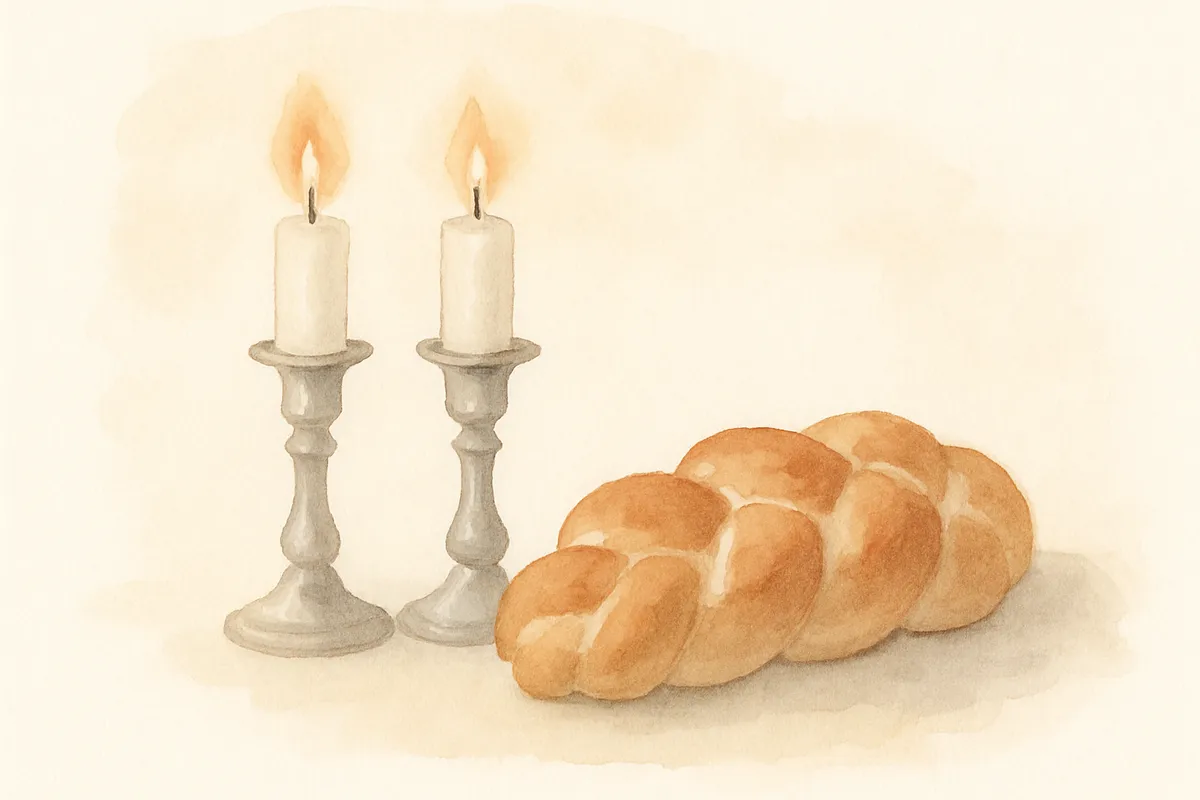
Shabbat (Shabbat — the Jewish Sabbath) is one of the most foundational institutions in all of Torah, rooted in both Creation and the Sinai covenant. The Torah commands: "זָכוֹר אֶת יוֹם הַשַּׁבָּת לְקַדְּשׁוֹ" — "Remember the Sabbath day to sanctify it" [Exodus 20:8], followed by a complete prohibition on melachah (creative labor) for oneself, one's household, animals, and even resident strangers [Exodus 20:8-10]. The laws of Shabbat are among the most extensive in all of halacha, covering dozens of categories of prohibited labor and hundreds of practical details.
Key Takeaways
- Shabbat begins at sunset Friday and ends Saturday night at nightfall (tzet hakochavim), with the positive obligations to honor (kavod) and delight (oneg) in the day.
- The Torah prohibits all melachah (creative/purposeful labor) on Shabbat, derived from the 39 categories (avot melachah) used in building the Mishkan (Tabernacle).
- The Mishnah in Chagigah notes that Shabbat laws are like "mountains hanging by a thread" — vast halachic detail derived from minimal Scriptural text [Mishnah Chagigah 1:8].
- Shabbat laws are rabbinic as well as Biblical, with the Sages adding protective decrees (gezeirot) around the Torah's prohibitions.
- Nearly all Shabbat prohibitions are suspended to save a human life (pikuach nefesh).
The Biblical Foundation
The Creation Narrative
Shabbat is rooted in God's own rest at the end of Creation: "וַיִּשְׁבֹּת בַּיּוֹם הַשְּׁבִיעִי מִכׇּל מְלַאכְתּוֹ" — "And He rested on the seventh day from all His work" [Genesis 2:1-3]. God not only rested but blessed and sanctified the day, giving it inherent holiness.
The Fourth Commandment
The Torah states at Sinai: "Six days you shall labor and do all your work, but the seventh day is a Sabbath to the LORD your God — you shall not do any melachah" [Exodus 20:8-10]. The Torah gives two reasons for Shabbat across the two versions of the Ten Commandments:
- Exodus 20 — zecher l'ma'aseh bereishit (remembrance of Creation)
- Deuteronomy 5 — zecher l'yetziat Mitzrayim (remembrance of the Exodus from Egypt)
The Scope of Shabbat Law — "Mountains Hanging by a Thread"
The Mishnah in Chagigah famously states:
"הִלְכוֹת שַׁבָּת... כַּהֲרָרִים תְּלוּיִם בִּשְׂעָרָה, מִקְרָא מְעֻעָט וַהֲלָכוֹת מְרֻבּוֹת" "The laws of Shabbat... are like mountains hanging by a thread — there is little Scripture and many halachot." [Mishnah Chagigah 1:8]
This striking image captures a core reality: the written Torah text is sparse, yet the body of Shabbat law is enormous, derived through the Oral Torah tradition.
The 39 Categories of Prohibited Labor (Avot Melachah)
The Talmud [Shabbat 73a] derives 39 primary categories (avot) of prohibited labor from the types of work performed in building the Mishkan (Tabernacle). These are grouped into several domains:
Agriculture & Food Production
- Plowing, sowing, reaping, binding sheaves, threshing, winnowing, selecting, grinding, sifting, kneading, baking
Textile Work
- Shearing wool, washing, combing, dyeing, spinning, weaving, separating threads, tying, untying, sewing, tearing
Construction & Writing
- Building, demolishing, writing, erasing
Fire & Electricity
- Kindling fire, extinguishing fire
- By rabbinic extension in the modern era, most poskim (halachic decisors) prohibit using electricity on Shabbat
Transfer
- Carrying from a private domain to a public domain (hotza'ah)
Rabbinic Additions (D'Rabbanan)
Beyond Biblical prohibitions, the Rabbis enacted:
- Gezeirot — protective decrees (e.g., prohibiting reading business documents lest one come to write)
- Shvut — rabbinic rest, prohibiting activities that "resemble" forbidden labor
- Uvdin d'chol — weekday-like activities considered beneath the dignity of Shabbat
- Muktze — items that may not be handled on Shabbat because they were not designated for Shabbat use
The Shulchan Aruch (Orach Chayim, Chapters 242–416) addresses hundreds of these applications, including details like: one may open water irrigation to a garden before Shabbat even if it flows all day, as the labor began before Shabbat [Shulchan Aruch, Orach Chayim 252:5].
Positive Commandments of Shabbat
Shabbat is not only about refraining — it carries positive obligations:
Kavod Shabbat — Honoring Shabbat
- Bathing, wearing special clothing, cleaning the home
- The Rambam rules that just as one honors Shabbat, so too all Yom Tov (Jewish holidays) must be honored, as the verse says "לִקְדוֹשׁ ה' מְכֻבָּד" — "honored for the sake of the Holy One" [Mishneh Torah, Hilchot Yom Tov 6:16]
Oneg Shabbat — Delighting in Shabbat
- Three festive meals (seudot), including the Friday night meal, Shabbat lunch, and seudah shlishit (third meal)
- Kiddush (sanctification over wine) on Friday night and Shabbat morning
- Havdalah (separation ceremony) at the close of Shabbat
Zachor and Shamor — Remember and Guard
- The two Biblical commands ("remember" in Exodus, "guard" in Deuteronomy) are understood as representing positive observance and negative prohibition respectively [Talmud, Berachot 20b]
Pikuach Nefesh — Saving Life Overrides Shabbat
One of the most important principles: saving a human life (pikuach nefesh) overrides nearly all Shabbat prohibitions. The Talmud [Yoma 85b] derives this from the verse "וָחַי בָּהֶם" — "and you shall live by them" (Leviticus 18:5) — meaning the Torah was given to live by, not to die by. The principle is: "חַלֵּל עָלָיו שַׁבָּת אַחַת כְּדֵי שֶׁיִּשְׁמֹר שַׁבָּתוֹת הַרְבֵּה" — "Desecrate one Shabbat for him so that he may keep many Shabbatot" [Yoma 85b].
Broader Themes
Shabbat is described by the Sages as "me'ein olam haba" — "a taste of the World to Come" [Berachot 57b]. It is simultaneously a covenant sign between God and Israel [Exodus 31:13], a social equalizer (all labor ceases regardless
Sources
People Also Asked
Want to dig deeper?