Does yishmael overtake edom at the end of days?
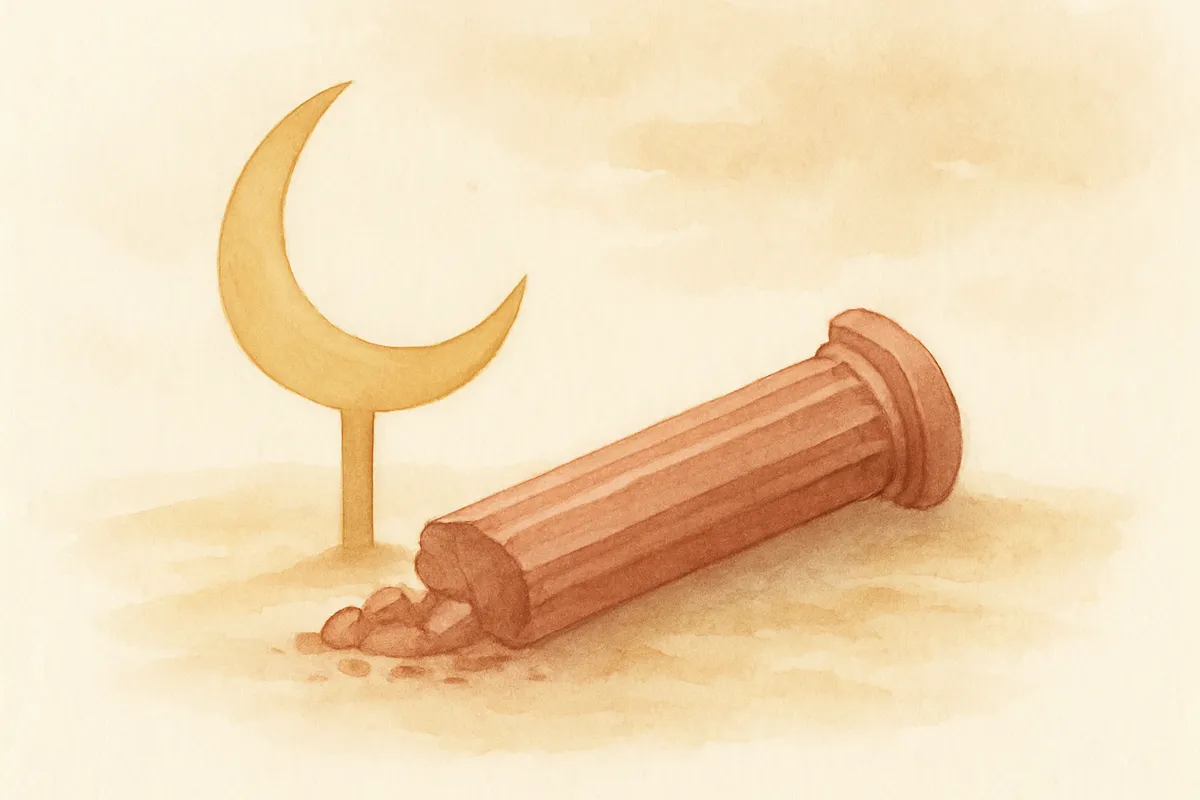
The relationship between Yishmael (Ishmael, representing the Arab/Muslim world in rabbinic typology) and Edom (representing Rome and later Christendom/Western civilization) at the end of days is a major theme in Jewish eschatological literature. According to the classical sources, yes — Yishmael does rise to dominance over Edom in the end of days, but this is part of a larger drama that ultimately leads to redemption.
Key Takeaways
- The Zohar and Midrashim describe a fierce conflict between Yishmael and Edom (Esav) at the end of days, with Yishmael gaining the upper hand temporarily.
- This struggle is seen as a necessary precursor to the coming of Mashiach (the Messiah).
- The suffering caused by Yishmael's rise is described as among the most severe birth pangs of the redemption (chevlei Mashiach).
- Ultimately, neither Yishmael nor Edom triumphs — both are subdued with the arrival of Mashiach.
- Many later authorities, including the Vilna Gaon and the Chofetz Chaim, saw this conflict playing out in their own times and identified it as a sign of imminent redemption.
The Core Sources
The Pirkei D'Rabbi Eliezer
Pirkei D'Rabbi Eliezer (Chapter 30) is one of the earliest sources to discuss Yishmael's role at the end of days. It states that the descendants of Yishmael will rule over the Land of Israel for a period before the redemption, and that they will "trouble Israel greatly." This is connected to the verse in Genesis where Yishmael is described as a פֶּרֶא אָדָם — "pere adam" ("a wild man") [Genesis 16:12], whose hand will be against everyone.
The Zohar
The Zohar (Vayeira 32a) contains one of the most dramatic descriptions of this conflict. It states:
"The children of Yishmael will stir great wars in the world, and the children of Edom will gather against them and wage war against them..."
The Zohar describes a prolonged struggle between the two forces, with the Holy Land and Jerusalem at the center of the conflict. Yishmael is described as dominating for a period, but this itself triggers the final war that brings Mashiach.
The Zohar on the Three Wars
The Zohar [Vayeira 17a, 32a] describes three waves of conflict involving Yishmael:
- Yishmael stirs up wars globally.
- Edom (the West) gathers against Yishmael.
- The conflict reaches the Land of Israel, at which point divine redemption begins.
Many commentators read this as meaning Yishmael does temporarily dominate, particularly over the Holy Land, before the final confrontation.
The Vilna Gaon's View
The Vilna Gaon (as recorded by his students in Kol HaTor) placed enormous emphasis on the conflict between Edom and Yishmael as the defining geopolitical reality of the pre-Messianic era. He taught that:
- The rise of Yishmael over the Land of Israel (which had historically been under Ottoman — i.e., Ishmaelite — rule) was a fulfillment of prophecy.
- The weakening of Yishmael's grip on the Land would be one of the signs of advancing redemption.
- He connected this to the verse: "וְהָיָה אַחֲרִית יִשְׁמָעֵאל" — the "end of Yishmael" coincides with the beginning of the redemption process.
The Chofetz Chaim's Warning
The Chofetz Chaim (Rabbi Yisrael Meir Kagan, 1838–1933) reportedly said in his later years that the wars of Gog and Magog would involve Yishmael rising against the world, and that this would be more terrible than any prior suffering. He urged Jews to strengthen themselves in Torah as the only protection during this period.
The Midrash on Yishmael's Fifteen Generations
Midrash Bereishit Rabbah (45:9) notes that God promised Hagar that Yishmael would have great power, and the rabbis count this as reaching its peak expression at the end of days. The "end of Yishmael" is thus paradoxically the time of his greatest power — just before his fall.
Important Nuances
- These are aggadic/eschatological sources, not binding halacha. There is a range of interpretation.
- The identifications of modern nations with "Edom" and "Yishmael" are rabbinic typologies, not literal genetics.
- Many authorities caution against making overly specific predictions or mapping these prophecies too precisely onto current events.
- The ultimate message is one of hope: all conflict between these powers ultimately serves to bring about Israel's redemption and the revelation of God's sovereignty.
For personal guidance on how to understand and apply these eschatological teachings, consult your local rabbi or posek.
Sources
People Also Asked
Want to dig deeper?