Can women pray at the kotel?
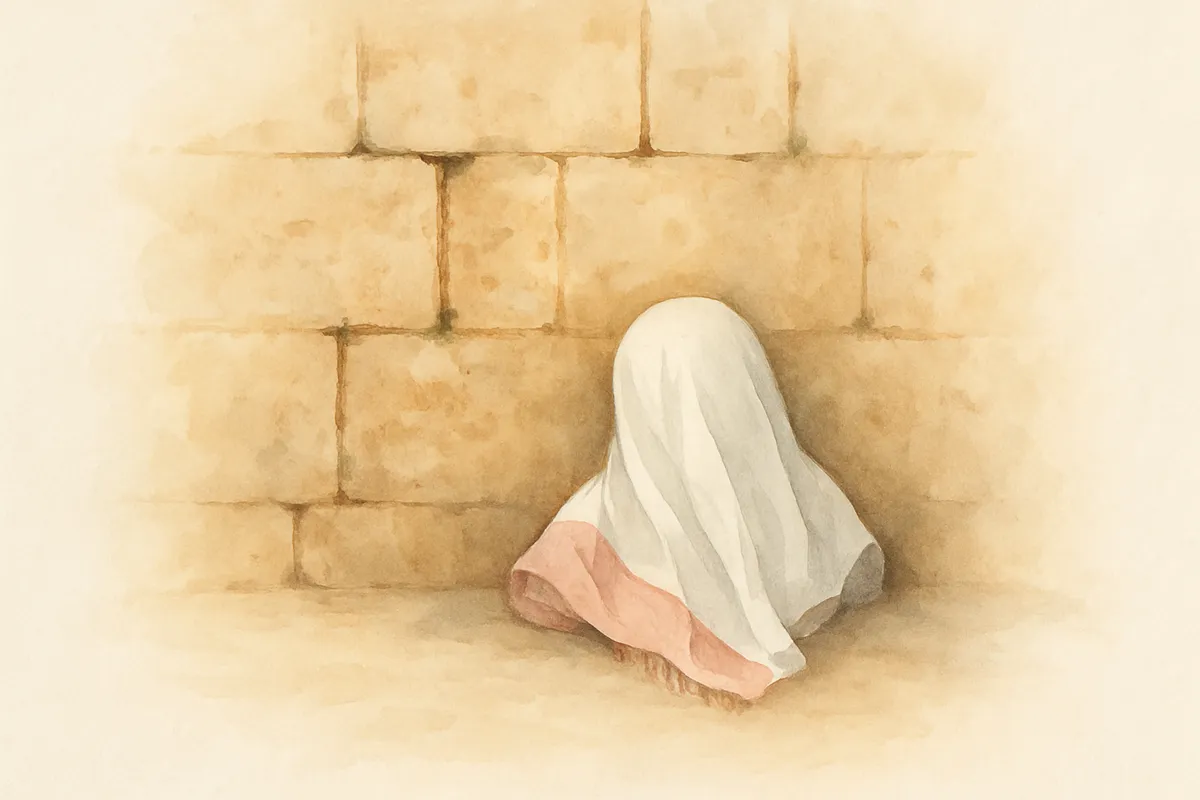
Women can pray at the Western Wall (Kotel), and this is both halachically permitted and historically practiced. The question of how they may pray — and in what section — has been the subject of significant halachic and political debate in recent decades, particularly regarding mixed prayer services and women's prayer groups.
Key Takeaways
- Women have an obligation to pray and have always been permitted to pray at the Kotel.
- The Kotel is divided into a men's section and a women's section, both of which are open for prayer.
- The debate centers on Women of the Wall and whether women may pray with a tallit (prayer shawl), tefillin, or Torah scroll in the women's section.
- The Israeli Supreme Court and government have debated the status of a designated "egalitarian plaza" (the Ezrat Yisrael section) at the southern end of the Kotel.
- Traditional halachic authorities generally maintain that the Kotel's prayer area should follow Orthodox practice, while liberal movements advocate for pluralistic access.
Women's Obligation to Pray
Women are obligated in prayer according to most halachic authorities. The Talmud [Berakhot 20b] records a debate about whether women's obligation in prayer is biblical or rabbinic, but the accepted view (Rambam, Mishneh Torah, Hilkhot Tefillah 1:1-2) is that women have a biblical obligation to pray — though they are generally exempt from time-bound positive commandments, prayer's biblical form is not strictly time-bound.
The verse from Deuteronomy reflects the core obligation:
"וּלְעׇבְד֔וֹ בְּכׇל־לְבַבְכֶ֖ם" — "And to serve Him with all your heart" [Deuteronomy 11:13]
The Talmud [Taanit 2a] identifies this "service of the heart" as prayer, and this applies to women as well.
Women at the Kotel — Historical Practice
Women have prayed at the Kotel for centuries in the women's section, which is separated from the men's section by a mechitza (partition). This is uncontroversial across all communities.
The Kotel functions halachically as a synagogue-like space, and therefore the traditional Orthodox standard of separate seating and modest conduct applies, according to the Rabbinate of Israel and most traditional authorities.
The Modern Controversy — Women of the Wall
The major controversy began in the late 1980s when the Women of the Wall group began holding monthly prayer services at the Kotel women's section that included:
- Women wearing tallitot (prayer shawls)
- Women reading from a Torah scroll
- Communal singing (kol isha considerations apply)
Traditional/Orthodox Position
- The Kotel's prayer area is administered by the Western Wall Heritage Foundation under Orthodox auspices.
- Wearing a tallit at the Kotel women's section was ruled by Israeli courts (initially) to violate "local custom" (minhag hamakom).
- Authorities such as the Chief Rabbinate of Israel hold that the women's section must follow traditional Orthodox practice.
- The concern is that changing the character of the site would desecrate its sanctity and offend the majority of worshippers there.
Liberal/Pluralist Position
- The Reform, Conservative, and Reconstructionist movements argue that all Jews should have equal access to the Kotel in a manner consistent with their own practice.
- They supported the 2016 government agreement to expand the Ezrat Yisrael egalitarian plaza at the southern end of the Kotel as a formal space for mixed prayer — though this agreement was subsequently frozen.
Halachic Considerations on Women and Ritual Items
On wearing tallit: Women are exempt from tzitzit (fringes) as a time-bound positive commandment. Rema (Orach Chaim 17:2) rules that women who wish to wear tzitzit are not fulfilling a mitzvah and it appears arrogant (yuhara). Most Ashkenazic authorities follow this view.
On reading Torah publicly: Most traditional authorities hold that women do not count toward a minyan and that a women's Torah reading in a formal public setting raises concerns, though opinions vary. Rav Moshe Feinstein [Igrot Moshe, Orach Chaim 1:104] addresses women's participation and maintains traditional boundaries.
The Kotel as Sacred Space
The Kotel is the holiest accessible site in Judaism — the remaining retaining wall of the Second Temple Mount. It is a place where Jews of all backgrounds have poured out their hearts to God for generations, as expressed in Psalms:
"וַאֲנִי תְפִלָּתִי לְךָ יְהֹוָה עֵת רָצוֹן" — "As for me, may my prayer to You, O Lord, be at a time of favor" [Psalms 69:14]
The sanctity of this site makes questions of its governance particularly charged — it is not merely a political dispute but one touching on Jewish identity, unity, and the nature of sacred space.
For personal guidance on how to conduct yourself at the Kotel or on questions of women's prayer practice, consult your local rabbi or posek.
Sources
People Also Asked
Want to dig deeper?