Can one eat chicken during the 9days
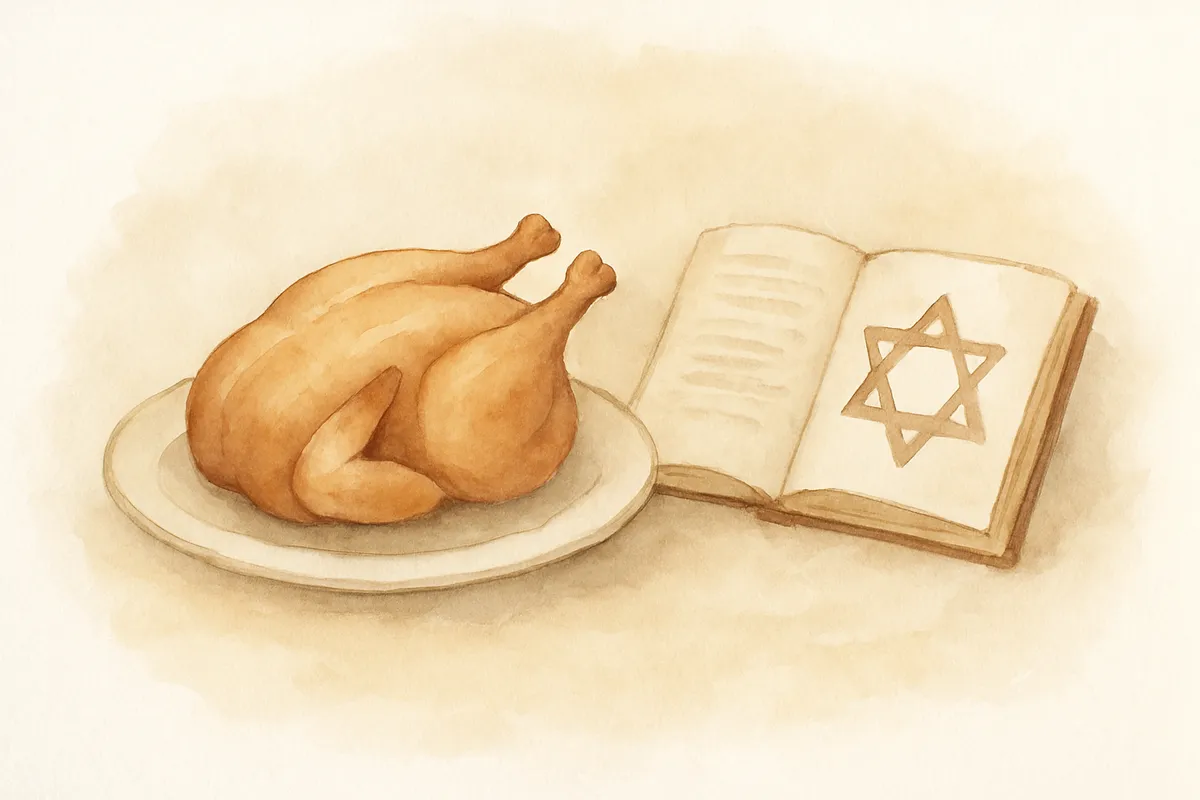
The custom (minhag) during the Nine Days (from Rosh Chodesh Av through Tisha B'Av) is to abstain from eating meat and poultry. Chicken is included in this prohibition according to the accepted Ashkenazic practice, though there are important exceptions and some differences of opinion among authorities.
Key Takeaways
- The Ashkenazic custom prohibits eating both meat and poultry during the Nine Days.
- Sephardic communities generally only restrict meat and poultry from the week of Tisha B'Av itself.
- Chicken is permitted at a Seudas Mitzvah (a meal for a religious occasion, such as a bris or a siyum).
- Children, the elderly, pregnant/nursing women, and the ill may be more lenient when health requires it.
- The prohibition stems from mourning over the destruction of the Beit HaMikdash (Holy Temple).
Background: Why No Meat or Poultry?
The restriction on meat and wine during the Nine Days is rooted in mourning practices for the Beit HaMikdash (Holy Temple). Meat and wine are associated with joy and festivity — they were central to Temple offerings and rejoicing.
The Mishnah Berurah [551:63] cites the custom to refrain from meat and wine during the Nine Days as a well-established Ashkenazic practice. The Shulchan Aruch [Orach Chaim 551:9] records that the custom of refraining from meat begins on Rosh Chodesh Av.
Does the Prohibition Include Chicken?
Ashkenazic Practice
Yes — the prevailing Ashkenazic custom, as codified by the Rema (Rabbi Moshe Isserles) [Shulchan Aruch, OC 551:9], includes poultry (chicken) in the prohibition alongside red meat.
The reasoning is that even though chicken was not technically offered as a sacrifice in the Temple, it has become associated with festive meals, and the spirit of mourning extends to it.
Sephardic Practice
Many Sephardic poskim (legal decisors) are more lenient. The Shulchan Aruch itself (authored by Rabbi Yosef Karo, a Sephardic authority) limits the meat restriction only to the week of Tisha B'Av, not the full Nine Days.
Some Sephardic authorities do permit chicken throughout most of the Nine Days, though customs vary by community.
Exceptions — When Chicken IS Permitted
Even for Ashkenazim, there are well-recognized exceptions:
- Seudas Mitzvah — A meal celebrating a mitzvah (e.g., a bris milah, a pidyon haben, or a siyum masechet — completion of a Talmudic tractate). Chicken and meat may be eaten at such a meal. [Mishnah Berurah 551:58]
- Shabbat — Meat and chicken are fully permitted on Shabbos during the Nine Days, since one does not publicly mourn on Shabbat. [Shulchan Aruch OC 551:10]
- Choleh (sick person) — One who is ill or weak and needs the nutrition may eat chicken. A rabbi should be consulted.
- Children — Young children who need the nutrition may be given chicken.
- Pregnant and nursing women — If they have a medical need, leniency may be granted.
The Siyum Loophole
A common and halachically valid practice is to make a siyum — completing a tractate of Talmud or a significant Torah text — which transforms the meal into a Seudas Mitzvah. This is widely practiced on Erev Tisha B'Av (the morning before the fast) as well as throughout the Nine Days, particularly for Maariv minyanim.
The Aruch HaShulchan [OC 551] and the Mishnah Berurah both acknowledge this as a legitimate leniency, though one should not make a sham siyum purely to eat meat — it must be a genuine completion of Torah learning.
Practical Summary
| Situation | Chicken Permitted? | |---|---| | Regular weekday meal (Ashkenazi) | ❌ No | | Regular weekday meal (Sephardi, before week of Tisha B'Av) | ✅ Often yes | | Shabbat during Nine Days | ✅ Yes | | Seudas Mitzvah / Siyum | ✅ Yes | | Sick person / child with need | ✅ With rabbinic guidance |
For personal guidance on your specific situation, consult your local rabbi or posek.
Sources
People Also Asked
Want to dig deeper?