Can i use sandald without socks for prayer?
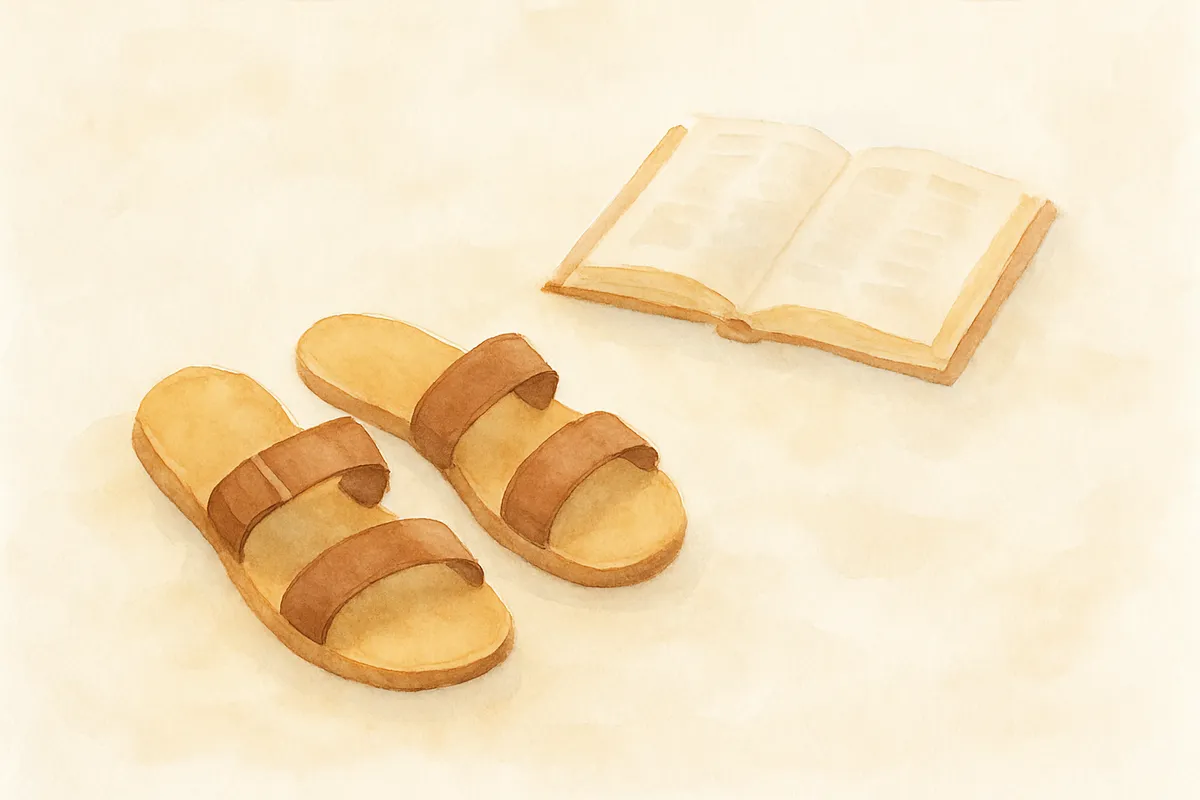
Wearing sandals without socks during prayer is generally permitted according to most halachic authorities. The core concern in Jewish law is not the footwear itself, but rather whether one is dressed respectfully (k'vod hatefilla — dignity of prayer), and local custom plays a significant role in determining what is considered appropriate.
Key Takeaways
- Wearing sandals without socks during prayer is permitted according to most authorities.
- The governing principle is k'vod hatefilla (dignity/respect in prayer), not a specific rule about socks.
- Local custom (minhag hamakom) is a major factor — what is considered dignified varies by community.
- Some Ashkenazic communities have a stricter custom, preferring covered feet during formal prayer.
- The Shulchan Aruch does not explicitly prohibit sandals without socks.
The Core Principle: Dignity in Prayer
The foundation for how one should dress during prayer comes from the verse in Deuteronomy 11:13:
"וּלְעׇבְד֔וֹ בְּכׇל־לְבַבְכֶ֖ם" — "And to serve Him with all your heart"
The Sages [Taanit 2a] identify this "service of the heart" as tefilla (prayer). If prayer is Divine service, one must dress in a manner befitting standing before a King.
The Shulchan Aruch [Orach Chaim 91:1] rules:
One should dress respectfully for prayer, just as one would dress to stand before a great person.
This is the operative standard — not a fixed dress code, but a contextual one based on dignity.
What the Sources Say About Footwear
The Talmudic Background
The Talmud [Shabbat 9b] discusses the importance of being properly dressed before prayer, including putting on one's shoes. However, this was in a context where shoes were considered a basic element of dignified dress in Talmudic times.
The Shulchan Aruch on Shoes
The Shulchan Aruch [Orach Chaim 91:5] states that one should wear shoes during prayer if possible. However, the Mishna Berura [91:12], Rav Yisrael Meir Kagan (Chofetz Chaim), clarifies that this refers to the general importance of respectful dress — not an absolute prohibition on sandals.
Sandals Specifically
- Rav Ovadia Yosef (Yechave Da'at 3:1) ruled that Sephardic Jews who customarily wear sandals without socks in warm weather may do so during prayer, since this is their normal dignified dress.
- Ashkenazic custom (minhag Ashkenaz) tends to be stricter — many Ashkenazic Jews prefer to wear shoes with socks out of a stronger sense of k'vod hatefilla.
- Rav Moshe Feinstein (Igrot Moshe, Orach Chaim) held that what matters is whether one would dress this way in front of a respected person in their community.
The Role of Local Custom (Minhag)
The key variable is minhag hamakom — the custom of the local community:
- In Israel and Sephardic communities, sandals without socks are very commonly worn even to synagogue, and this is widely accepted.
- In American and European Ashkenazic communities, more formal footwear is the norm, and sandals without socks may be seen as insufficiently dignified in a synagogue setting.
- For private prayer at home, the standards are generally more lenient across all communities.
Prayer in a Time of Need
Notably, Psalms 69:14 (one of our retrieved sources) teaches:
"וַאֲנִי תְפִלָּתִי לְךָ יְהֹוָה עֵת רָצוֹן" — "As for me, my prayer to You, O Lord, is at a time of favor."
This verse, recited before Mincha on Shabbat, reminds us that sincerity and timing are central to prayer. While proper dress matters, the heart (levav) driving the prayer is paramount.
Practical Bottom Line
- At home or in a casual setting: Sandals without socks are generally fine.
- In synagogue: Follow your community's custom. If your community is relaxed about it, you may rely on the lenient opinion.
- Sephardic Jews: Have strong halachic backing to permit this.
- Ashkenazic Jews: Check your community's standard.
For personal guidance, consult your local rabbi or posek.
Sources
People Also Asked
Want to dig deeper?