Are today's tattoos the same as prohibited in the Torah
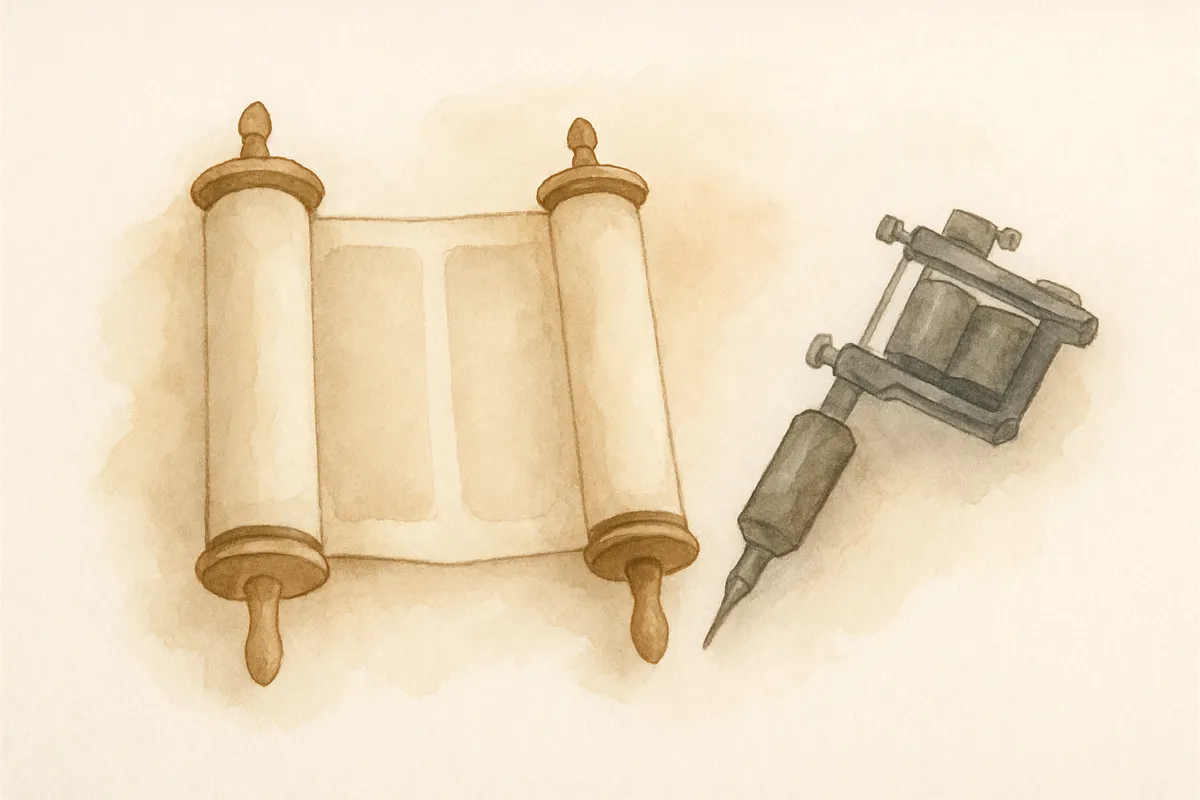
The Torah prohibits tattoos (kote'vet ka'aka' — כְּתֹבֶת קַעֲקַע), and the overwhelming consensus of halachic authorities holds that modern tattoos fall squarely within this biblical prohibition. The Torah's ban in Leviticus 19:28 applies to any permanent marking inscribed into the skin with ink or pigment — which is precisely what modern tattooing involves. However, the Talmud's technical conditions for biblical liability clarify exactly what the prohibition covers, and some nuances remain relevant today.
Key Takeaways
- The Torah explicitly prohibits kote'vet ka'aka' (tattoo markings) in Leviticus 19:28, and modern tattoos meet this definition.
- The Talmud requires both writing AND permanent puncturing of the skin for the full biblical violation — modern tattoos fulfill both conditions.
- A minority opinion holds the prohibition only applies when God's name is written — but this view is not accepted as mainstream halacha.
- There is a widespread misconception that having a tattoo prevents Jewish burial — this is not true according to halacha.
- The prohibition applies regardless of whether the tattoo is done for mourning or idolatrous purposes, though the Torah's context connects it to pagan practices.
The Torah Source
Leviticus 19:28 states explicitly:
"וּכְתֹבֶת קַֽעֲקַ֔ע לֹ֥א תִתְּנ֖וּ בָּכֶ֑ם אֲנִ֖י יְהֹוָֽה׃" "And a tattoo inscription you shall not put upon yourselves; I am the Lord." [Leviticus 19:28]
The verse appears alongside prohibitions against gashing the flesh in mourning (verse 28) and rounding the corners of the head (verse 27), suggesting the broader context is separation from Canaanite and Egyptian pagan practices [Leviticus 19:27-28].
What the Talmud Says: Technical Conditions
The Mishnah Makkot 3:6 defines precisely when one is legally liable (chayav) for this prohibition:
"הַכּוֹתֵב כְּתֹבֶת קַעֲקַע — כָּתַב וְלֹא קִעֲקַע, קִעֲקַע וְלֹא כָתַב, אֵינוֹ חַיָּב, עַד שֶׁיִּכְתֹּב וִיקַעֲקֵעַ בִּדְיוֹ וּבִכְחֹל וּבְכָל דָּבָר שֶׁהוּא רוֹשֵׁם" "One who writes a tattoo inscription — if he wrote but did not puncture, or punctured but did not write, he is not liable — unless he both writes AND punctures with ink, blue dye, or any substance that makes a mark." [Mishnah Makkot 3:6]
The Two Required Elements
The Mishnah identifies two components for the full biblical violation:
- Ketivah (כְּתִיבָה) — writing or inscribing a mark
- Ka'aka' (קַעֲקַע) — puncturing the skin so the mark is permanent
Modern tattoos — which use needles to inject pigment beneath the skin — fulfill both conditions perfectly. This is why poskim (halachic decisors) universally apply the prohibition to contemporary tattoos.
The Minority Opinion: Only God's Name?
Rabbi Shimon ben Yehuda in the name of Rabbi Shimon argues:
"אֵינוֹ חַיָּב עַד שֶׁיִּכְתּוֹב שָׁם הַשֵּׁם" "He is not liable unless he writes God's Name [there]." [Mishnah Makkot 3:6; Talmud Makkot 21a]
This opinion reads the verse's ending — "אֲנִי ה׳" ("I am the Lord") — as specifying what must be written for liability. The Gemara [Makkot 21a] clarifies this does not mean literally writing "Ani Hashem," but rather any divine name.
However, this remains a minority opinion. The accepted halacha follows the first Tanna (anonymous Mishnah opinion) that any permanent marking triggers the prohibition, regardless of content.
Does the Reason Matter? Mourning vs. Decoration
Rashi [Leviticus 19:28] connects the prohibition to pagan mourning customs, suggesting the Torah targets the practice of cutting and marking the body as rituals for the dead.
Maimonides (Rambam) in Mishneh Torah, Laws of Idolatry 12:11 extends the prohibition to any tattoo, even one made purely for aesthetic decoration, with no pagan intent — as long as it is permanent. This is the mainstream halachic position.
The underlying principle, as noted by many commentators, is kedushat haguf (קְדֻשַּׁת הַגּוּף) — the sanctity of the body, which belongs to God and must not be permanently defaced.
The Burial Misconception
It is widely believed in popular culture that a tattooed Jew cannot be buried in a Jewish cemetery. This is not supported by halacha. The prohibition is on getting a tattoo, not on having one. Someone who received a tattoo — even willingly — is still a Jew, still buried as a Jew, and the tattoo does not affect their Jewish status or burial rights. Many poskim explicitly address and dismiss this myth.
Bottom Line for Today
Modern tattoos are prohibited by the Torah's biblical commandment. They fulfill every technical criterion established by the Talmud — permanent pigment punctured into the skin. The prohibition is well-established and undisputed among mainstream halachic authorities.
For personal guidance on this or related matters, consult your local rabbi or posek.
Sources
People Also Asked
Want to dig deeper?