A Torah scroll with missing letters. What are the halachic implications of this?
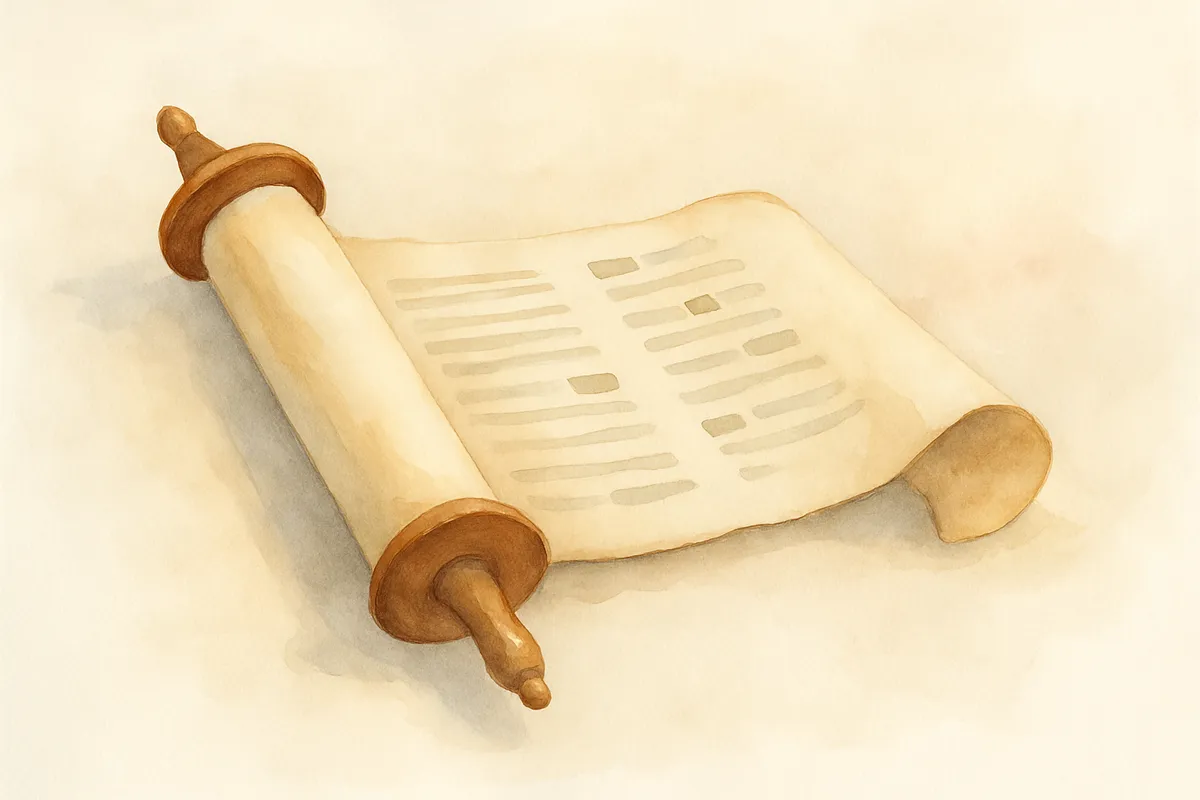
A Torah scroll (Sefer Torah) with missing words is considered pasul (invalid/disqualified) for public reading, and this has been the case since the defect originated — meaning every Torah reading performed with this scroll over the decades was technically done with an invalid scroll. However, the community did not sin intentionally, and the readings themselves fulfilled the obligation b'dieved (after the fact) according to many authorities because the congregation was unaware of the defect. The immediate practical steps involve repairing or replacing the scroll and addressing the Genesis section specifically.
Key Takeaways
- A Torah scroll missing even one letter — let alone five words — is pasul (invalid) and may not be used for public Torah reading.
- Because your community read only from Exodus, the missing Genesis text may not have directly affected the portions being read, which is a significant leniency.
- The scroll may potentially be repaired by a qualified sofer (scribe), which would render it kasher (valid) going forward.
- Past readings performed unknowingly with a pasul Torah are generally not required to be repeated, according to most authorities.
- This situation requires immediate consultation with a qualified posek (halachic decisor) and a certified sofer STaM.
Is the Scroll Pasul? The Basic Halachic Problem
The core rule is unambiguous: a Sefer Torah that is missing even a single letter is pasul — invalid for ritual use. This is derived from the requirement that a Torah scroll be written in its entirety (shleimut).
The Shulchan Aruch (Yoreh De'ah 279:1) states clearly that a Torah scroll that is missing letters or words is invalid and may not be read from publicly. The Rambam (Mishneh Torah, Hilchot Sefer Torah 10:1) likewise rules that a Torah missing even one letter does not fulfill the mitzvah of writing a Sefer Torah and is not fit for use.
Five missing words represent a substantial lacuna — this is unambiguously pasul by all opinions.
The Critical Question: Where Were the Words Missing?
This is where your situation has an important nuance. You note that:
- The words are missing from Genesis
- The scroll has been used exclusively to read from Exodus
Does a Defect in One Part Invalidate Readings from Another Part?
This is a genuine halachic debate among the poskim (legal decisors):
-
The stringent view holds that a Sefer Torah is a single unified object (cheftza echad). A defect anywhere in the scroll renders the entire scroll pasul, regardless of where one reads. This is consistent with the Rambam's framing of the scroll as a complete whole.
-
The lenient view, discussed in the context of shaas hadechak (time of pressing need), suggests that if the portion being read is itself intact and complete, there may be room for leniency. This reasoning appears in later responsa literature dealing with communities that had limited access to kosher Torah scrolls.
The majority and mainstream halachic position follows the stringent view — the scroll is pasul in its entirety, not just in the Genesis section. The Mishnah Berurah (143:4) and most Acharonim (later authorities) hold this position.
What About the Past Readings — Must They Be Repeated?
This is a critical pastoral question for your community. The general principle is:
"B'dieved" — after the fact, where an act was performed in error or ignorance, we are often more lenient than we would be l'chatchila (at the outset).
The Shulchan Aruch (Orach Chaim 143:2–4) addresses the case where a Torah is found to be pasul mid-reading or after a reading. The ruling is:
- If discovered mid-reading, another scroll must be brought and the reading resumed.
- If discovered after the reading is complete, the reading does not need to be repeated, because the congregation fulfilled their obligation b'dieved through hearing the words of the Torah, even if the scroll was technically invalid.
This leniency is especially strong in your case because:
- The community acted in complete good faith (ones — duress/unavoidable error)
- The defect was in a section never read from
- The scroll was 110 years old and the defect was presumably unknown to anyone alive today
Most authorities would rule that no past readings need to be repeated.
Can the Scroll Be Repaired?
Yes — this is likely the most important practical point. A sofer STaM (qualified scribe) can potentially repair the scroll by adding the missing words, provided:
- The parchment (klaf) in the Genesis section is still intact and in sufficient condition to accept new ink
- The repair can be made in a halachically valid manner (correct lettering, ink, intention, etc.)
- The surrounding text is still kasher
The Aruch HaShulchan (Yoreh De'ah 290:5) discusses the permissibility of repairing a Sefer Torah, noting that it is permitted to repair the scroll itself when there is no other alternative, and that attaching patches or making corrections to the margins and parchment is a legitimate form of restoration — not a denigration of the scroll's sanctity [Arukh HaShulchan, Yoreh De'ah 290:5].
A competent sofer should:
- Inspect the entire scroll, not just the Genesis section — a 110-year-old Torah may have additional defects (chalot) throughout
- Assess whether the parchment can receive new ink without cracking or bleeding
- Repair all defects found
The Language of the Torah Scroll
The Mishnah Megillah 1:8 establishes that while sefarim (biblical books) may technically be written in other languages, tefillin and mezuzot must be written in Ashurit (the square Hebrew script) [Mishnah Megillah 1:8]. Rabban Shimon ben Gamliel adds that even Torah scrolls used for public reading were only permitted in Greek (Yevanit) as a special exception.
This is relevant because it underscores that the integrity of the text itself — in its proper form — is of paramount halachic importance. A missing word is not a technicality; it goes to the heart of what makes a Sefer Torah valid.
Immediate Practical Steps
- Remove the scroll from use immediately — do not read from it until it is certified kasher by a sofer
- Commission a full inspection (bedikah) by a certified sofer STaM — the entire 110-year-old scroll should be checked
- Have the missing words repaired if the parchment permits
- Consult a posek about the specific status of your past readings and any communal obligations
- Arrange an alternative kosher scroll for readings in the interim
For personal and communal guidance on this matter, please consult your local rabbi or posek — ideally one with experience in the laws of Stam (scribal law). The specific condition of the parchment, the nature of the missing text, and local custom may all affect the ruling in your particular case.
Sources
People Also Asked
Want to dig deeper?